

Lutheran beliefs: what the Lutheran tradition teaches
Lutherans confess that we are justified freely for Christ's sake through faith, and that God creates and strengthens that faith through His Word and the sacraments. The Book of Concord, especially the Augsburg Confession and Luther's Small Catechism, sets out this faith as a faithful exposition of Scripture, the only rule and norm.
Worship: The historic Mass in a Lutheran hymnal liturgy, with hymns and the Lord's Supper, often every Sunday.
Branches in the quiz: Lutheran Church–Missouri Synod, Evangelical Lutheran Church in America.
Take the quizVisit a church
Lutheran Church–Missouri Synod
Evangelical Lutheran Church in America
These are each tradition's own church directories. We don't review individual congregations.
Read more
- The Small Catechism — Martin LutherFree online
Luther wrote this for families to read at home, and it's still the best place to start.
- The Book of Concord — Lutheran ConfessionsFree online
The full set of Lutheran confessions, including the Augsburg Confession, with readable introductions.
- Life Together — Dietrich Bonhoeffer
A short book on Christian community, written by a Lutheran pastor in an underground seminary in Nazi Germany.
Confessions and statements from Lutheran churches
Figures and practice companions
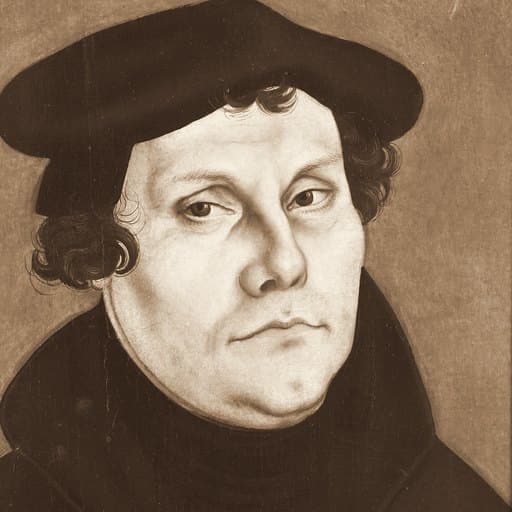
Image credit Martin Luther
1483–1546 · Lutheran
German monk and professor whose 95 Theses (1517) began the Reformation; translated the Bible into German and wrote the Small Catechism.
Read: The Small CatechismFree onlineWorth knowing: His late writings against the Jews, especially On the Jews and Their Lies (1543), are harshly antisemitic; he also urged princes to crush the 1525 peasant revolt.
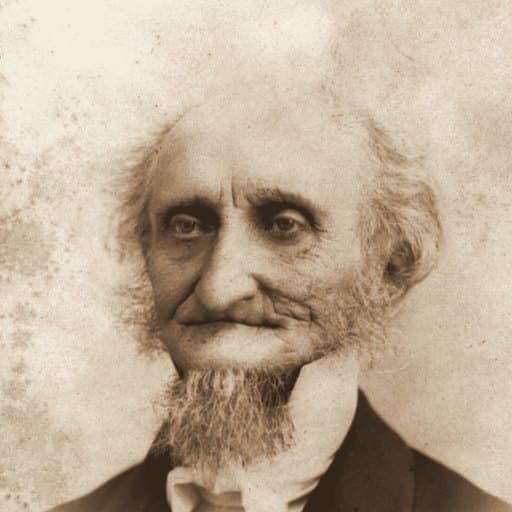
Image credit C. F. W. Walther
1811–1887 · Lutheran (Missouri Synod)
Saxon immigrant pastor, first president of the Lutheran Church–Missouri Synod, known for The Proper Distinction Between Law and Gospel.
Read: The Proper Distinction Between Law and Gospel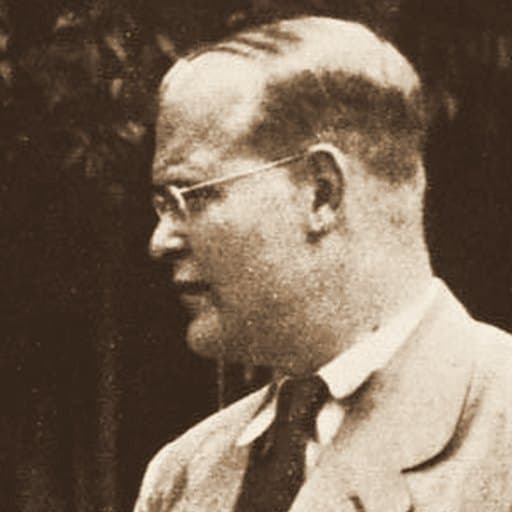
Image credit Dietrich Bonhoeffer
1906–1945 · Lutheran (Germany)
Lutheran pastor and theologian of the Confessing Church, author of The Cost of Discipleship and Life Together, executed by the Nazis in 1945.
Read: The Cost of Discipleship
Practices associated with Lutheran churches
Luther's Morning and Evening Prayer
When you get up, say "In the name of the Father, and of the Son, and of the Holy Spirit." Pray the Creed and the Lord's Prayer, then Luther's short prayer asking God to keep you this day. It takes about three minutes, and it gives the day a simple shape.
The "Daily Prayers" in Luther's Small Catechism (1529): the sign of the cross, the Creed, the Lord's Prayer and a short prayer of trust, then off to work "with joy".
Source: Small Catechism, Daily Prayers“In the morning, when you rise, you shall bless yourself with the holy cross and say: In the name of God the Father, Son, and Holy Ghost. Amen.”
About Morning PrayerA Simple Way to Pray
Take one line of the Lord's Prayer or one commandment. Ask what it teaches you, give thanks for it, confess where you fall short, and pray for help. Luther told his barber to stop and listen when a thought from God takes hold. Two or three lines a day is enough.
Luther's 1535 booklet for his barber, Peter Beskendorf, showing how to pray through the Lord's Prayer, the Ten Commandments and the Apostles' Creed.
Source: Christian History Institute, "How I Pray"“Such were the questions put to Luther by his barber and lifelong friend, Peter Beskendorf.”
Compare Lutheran teaching by topic
Lutheran coverage: 29 of 31 questions. Review status and scoring
Lutheran Church–Missouri Synod · 29 topics available
No official position scored: When Christians pray for the sick, which is closest to what you think? Which music helps you worship most?
Evangelical Lutheran Church in America · 28 topics available
No official position scored: Which is closest to what you think about gifts like prophecy, tongues and healing today? When Christians pray for the sick, which is closest to what you think? Which music helps you worship most?
Read the positions and sources
Scripture and authority
When Christians disagree about what to believe, which is closest to what you think should settle it?
Lutheran Church–Missouri Synod
Teaches: “The Bible alone has the final word. Creeds, councils and teachers are all tested by it.”
Source: LCMS Constitution, Art. II.1 (2019 Handbook)“The Scriptures of the Old and the New Testament as the written Word of God and the only rule and norm of faith and of practice”
Evangelical Lutheran Church in America
Teaches: “The Bible alone has the final word. Creeds, councils and teachers are all tested by it.”
Some hold: “The Bible comes first, read together with the church's historic creeds and with reason and experience.”
Source: ELCA Constitution, 2.03“This church accepts the canonical Scriptures of the Old and New Testaments as the inspired Word of God and the authoritative source and norm of its proclamation, faith, and life.”
Which is closest to what you think about creeds and confessions (written summaries of what a church believes)?
Lutheran Church–Missouri Synod
Teaches: “A full confession of faith binds our pastors and teachers, because it faithfully sums up what Scripture teaches.”
Makes room for: “The historic creeds matter, and our confessions guide us, but they leave room to read some things differently.”
Source: LCMS Constitution, Art. II.2 (2019 Handbook)“All the Symbolical Books of the Evangelical Lutheran Church as a true and unadulterated statement and exposition of the Word of God”
Evangelical Lutheran Church in America
Teaches: “The historic creeds matter, and our confessions guide us, but they leave room to read some things differently.”
Some hold: “A full confession of faith binds our pastors and teachers, because it faithfully sums up what Scripture teaches.”
Source: ELCA Constitution, 2.05-2.06“This church accepts the Unaltered Augsburg Confession as a true witness to the Gospel”
Which is closest to how you see the Bible's truthfulness?
Lutheran Church–Missouri Synod
Teaches: “The Bible is without error in everything it affirms, including what it says about history and the world.”
Source: Brief Statement of the Doctrinal Position of the Missouri Synod (1932), Of the Holy Scriptures, 1“they contain no errors or contradictions, but that they are in all their parts and words the infallible truth, also in those parts which treat of historical, geographical, and other secular matters”
Evangelical Lutheran Church in America
Teaches: “The Bible is God's word through human writers. It tells the truth about Christ, and careful scholarship helps us read it.”
Some hold: “The Bible is fully trustworthy in everything it teaches about God, salvation and how to live.”
Makes room for: “The Bible holds God's word alongside its writers' own views, and we discern which parts speak for God today.”
Source: ELCA Constitution, 2.02c“Inspired by God’s Spirit speaking through their authors, they record and announce God’s revelation centering in Jesus Christ.”
Salvation and grace
When God puts a sinner right with Himself, which is closest to what you think happens?
Lutheran Church–Missouri Synod
Teaches: “God forgives us and counts us righteous for Christ's sake, crediting His righteousness to us. We receive this by faith alone.”
Source: Augsburg Confession, Art. IV“This faith God imputes for righteousness in His sight.”
Evangelical Lutheran Church in America
Teaches: “God forgives us and counts us righteous for Christ's sake, crediting His righteousness to us. We receive this by faith alone.”
Source: Augsburg Confession, Art. IV“This faith God imputes for righteousness in His sight.”
Which is closest to how you think God usually gives people His saving grace?
Lutheran Church–Missouri Synod
Teaches: “Through His Word preached and the sacraments, which the Holy Spirit uses to create and strengthen faith.”
Source: Augsburg Confession, Art. V“That we may obtain this faith, the Ministry of Teaching the Gospel and administering the Sacraments was instituted.”
Evangelical Lutheran Church in America
Teaches: “Through His Word preached and the sacraments, which the Holy Spirit uses to create and strengthen faith.”
Source: The Use of the Means of Grace (ELCA, 1997), Principle 2 and Background 2A“God has promised to come to all through the means of grace: the Word and the sacraments of Christ's institution.”
Which is closest to what you think about whom Christ died to save?
Lutheran Church–Missouri Synod
Teaches: “Christ died for every person, so that anyone who turns to Him can be saved.”
Source: Formula of Concord, Solid Declaration, Art. XI (Election)“Christ bore the sins of the world, John 1:29”
Evangelical Lutheran Church in America
Teaches: “Christ died for every person, so that anyone who turns to Him can be saved.”
Source: Formula of Concord, Solid Declaration, Art. XI (Election)“Christ bore the sins of the world, John 1:29”
Which is closest to what you think about God's choosing and our choice?
Lutheran Church–Missouri Synod
Teaches: “Salvation is God's work alone, and He chose us in Christ. He chose no one to be lost; the lost refuse His grace.”
Source: Formula of Concord, Epitome, Art. XI (Election)“predestination or eternal election of God, however, extends only over the godly, beloved children of God, being a cause of their salvation”
Evangelical Lutheran Church in America
Teaches: “Salvation is God's work alone, and He chose us in Christ. He chose no one to be lost; the lost refuse His grace.”
Source: Formula of Concord, Epitome, Art. XI (Election)“predestination or eternal election of God, however, extends only over the godly, beloved children of God, being a cause of their salvation”
Which is closest to what you think: can a true believer fall away and be lost?
Lutheran Church–Missouri Synod
Teaches: “Yes. A believer can turn away from Christ and be lost, but while we live His grace keeps calling us back.”
Source: Augsburg Confession, Art. XII“Of Repentance they teach that for those who have fallen after Baptism there is remission of sins whenever they are converted”
Evangelical Lutheran Church in America
Teaches: “Yes. A believer can turn away from Christ and be lost, but while we live His grace keeps calling us back.”
Source: Augsburg Confession, Art. XII“Of Repentance they teach that for those who have fallen after Baptism there is remission of sins whenever they are converted”
Which is closest to what you think about knowing where you stand with God?
Lutheran Church–Missouri Synod
Teaches: “I can be sure of God's grace because He promised it to me in His Word and in baptism, whatever I feel.”
Makes room for: “Every true believer can be certain now of being saved in the end, because it rests on God's promise.”
Source: Large Catechism, Part IV (Baptism)“Nevertheless I am baptized; but if I am baptized, it is promised me that I shall be saved and have eternal life, both in soul and body.”
Evangelical Lutheran Church in America
Teaches: “I can be sure of God's grace because He promised it to me in His Word and in baptism, whatever I feel.”
Source: Large Catechism, Part IV (Baptism)“Nevertheless I am baptized; but if I am baptized, it is promised me that I shall be saved and have eternal life, both in soul and body.”
Which is closest to what you think about how God makes believers holy?
Lutheran Church–Missouri Synod
Teaches: “Holiness grows over a whole lifetime. Sin remains in us until we die, though it no longer rules us.”
Source: Small Catechism, Part IV (Baptism)“It signifies that the old Adam in us should, by daily contrition and repentance, be drowned and die with all sins and evil lusts”
Evangelical Lutheran Church in America
Teaches: “Holiness grows over a whole lifetime. Sin remains in us until we die, though it no longer rules us.”
Some hold: “Holiness is following Jesus in daily obedience, with a church that encourages and corrects us.”
Source: Small Catechism, Part IV (Baptism)“It signifies that the old Adam in us should, by daily contrition and repentance, be drowned and die with all sins and evil lusts”
The church
Which is closest to how you think the church should be led?
Lutheran Church–Missouri Synod
Teaches: “By each local congregation under Christ, with leaders such as pastors, elders or clerks, free from outside control.”
Makes room for: “By bishops or superintendents who oversee a connection of churches and help place their pastors.” or “By elders, pastors and lay elders together, with local churches joined in regional and national assemblies.”
Source: LCMS Constitution, Art. VII (2019 Handbook)“with respect to the individual congregation’s right of self-government it is but an advisory body”
Evangelical Lutheran Church in America
Teaches: “By bishops or superintendents who oversee a connection of churches and help place their pastors.”
Makes room for: “By each local congregation under Christ, with leaders such as pastors, elders or clerks, free from outside control.”
Source: ELCA Constitution, 10.31 (synod bishop)“As the synod’s pastor, the bishop shall: 1) Oversee and administer the work of the synod.”
Which is closest to what you think about who may be ordained as a pastor or priest?
Lutheran Church–Missouri Synod
Teaches: “Only men may serve as pastors or elders, and women serve in many other vital ministries.”
Source: LCMS, Frequently Asked Questions (lcms.org), Difference between LCMS and other Lutheran bodies“a male-only pastoral office”
Evangelical Lutheran Church in America
Teaches: “Both men and women may be called by God and ordained as pastors.”
Source: ELCA Constitution (Sept 2026), 5.01.f“the representation of rostered ministers shall include both men and women”
Which is closest to what you think about ordination in an unbroken line from the apostles?
Lutheran Church–Missouri Synod
Teaches: “What matters is that ministers hold to the apostles' teaching and are rightly called and ordained by the church.”
Source: Treatise on the Power and Primacy of the Pope, 61“this power by divine right is common to all who preside over churches, whether they are called pastors, or elders, or bishops”
Evangelical Lutheran Church in America
Teaches: “It's a precious gift the church should keep, though God also works through churches without it.” or “What matters is that ministers hold to the apostles' teaching and are rightly called and ordained by the church.”
Source: Called to Common Mission (adopted by the ELCA Churchwide Assembly, 1999), para. 18“By thus freely accepting the historic episcopate, the Evangelical Lutheran Church in America does not thereby affirm that it is necessary for the unity of the church”
Which is closest to what you think about Christians, war and oaths?
Lutheran Church–Missouri Synod
Teaches: “Christians may serve in the military for a just cause and may take an oath when the law asks for one.”
Makes room for: “Christians should work for peace, and each believer may follow conscience about serving in the military.”
Source: Augsburg Confession, Art. XVI“to engage in just wars, to serve as soldiers, to make legal contracts, to hold property, to make oath when required by the magistrates”
Evangelical Lutheran Church in America
Teaches: “Christians may serve in the military for a just cause and may take an oath when the law asks for one.” or “Christians should work for peace, and each believer may follow conscience about serving in the military.”
Source: ELCA social statement page: For Peace in God's World (1995), elca.org summary“this statement affirms just war teaching in the service of just peace”
Baptism and the Lord’s Supper
Which is closest to what you think about who should be baptized?
Lutheran Church–Missouri Synod
Teaches: “Believers and their children. Babies of Christian families should be baptized and raised in the faith.”
Source: Augsburg Confession, Art. IX“children are to be baptized who, being offered to God through Baptism are received into God’s grace”
Evangelical Lutheran Church in America
Teaches: “Believers and their children. Babies of Christian families should be baptized and raised in the faith.”
Source: Augsburg Confession, Art. IX“children are to be baptized who, being offered to God through Baptism are received into God’s grace”
Which is closest to what you think happens in baptism?
Lutheran Church–Missouri Synod
Teaches: “God truly washes away sin and gives new birth in baptism, joining the person to Christ.”
Source: Small Catechism, Part IV (Baptism)“It works forgiveness of sins, delivers from death and the devil, and gives eternal salvation to all who believe this”
Evangelical Lutheran Church in America
Teaches: “God truly washes away sin and gives new birth in baptism, joining the person to Christ.”
Source: Small Catechism, Part IV (Baptism)“It works forgiveness of sins, delivers from death and the devil, and gives eternal salvation to all who believe this”
Which is closest to what you think about how baptism should be done?
Lutheran Church–Missouri Synod
Teaches: “Pouring, sprinkling or immersion are all fine. The water and the name of the Trinity are what matter.”
Makes room for: “By immersing three times, in the name of the Father, and of the Son, and of the Holy Spirit.” or “Usually by pouring water on the head, as a sign of the Holy Spirit poured out.”
Source: Large Catechism, Holy Baptism“we need not again be sprinkled with water; for though we were put under the water a hundred times, it would nevertheless be only one Baptism”
Evangelical Lutheran Church in America
Teaches: “Pouring, sprinkling or immersion are all fine. The water and the name of the Trinity are what matter.”
Some hold: “Usually by pouring water on the head, as a sign of the Holy Spirit poured out.”
Source: The Use of the Means of Grace (ELCA, 1997), Application 26A“A variety of modes may be used; for example, both immersion and pouring show forth God's power in Baptism.”
When the church shares the bread and cup, which is closest to what you think?
Lutheran Church–Missouri Synod
Teaches: “Christ's true body and blood are present in, with and under the bread and wine, received by all who eat.”
Source: LCMS, Frequently Asked Questions (lcms.org), What is the Lord’s Supper?“Christ dwells in body and spirit in, with and under the bread and wine”
Evangelical Lutheran Church in America
Teaches: “Christ's true body and blood are present in, with and under the bread and wine, received by all who eat.”
Makes room for: “The bread and wine truly become Christ's body and blood. How this happens is a holy mystery we don't define.” or “Christ is truly present by His Spirit, and believers feed on Him by faith, while the bread stays bread.”
Source: Small Catechism, Part VI (Sacrament of the Altar)“It is the true body and blood of our Lord Jesus Christ, under the bread and wine, for us Christians to eat and to drink”
Which is closest to what you think about how often a church should share the Lord's Supper?
Lutheran Church–Missouri Synod
Teaches: “Every Sunday, as the high point of worship, and on many other days too.”
Some hold: “Every Sunday, because the first Christians broke bread on the first day of each week.” or “Regularly, perhaps monthly or quarterly. It's special, but it isn't part of every service.”
Source: Apology of the Augsburg Confession, Art. XXIV 1“For among us masses are celebrated every Lord’s Day and on the other festivals”
Evangelical Lutheran Church in America
Teaches: “Every Sunday, as the high point of worship, and on many other days too.”
Some hold: “Every Sunday, because the first Christians broke bread on the first day of each week.” or “Regularly, perhaps monthly or quarterly. It's special, but it isn't part of every service.”
Source: The Use of the Means of Grace (ELCA, 1997), Principle 35“According to the Apology of the Augsburg Confession, Lutheran congregations celebrate the Holy Communion every Sunday and festival. This confession remains the norm for our practice.”
Which is closest to what you think Christ gave His church to keep as lasting rites?
Lutheran Church–Missouri Synod
Teaches: “Two sacraments, baptism and the Lord's Supper, through which God gives His grace.”
Source: Apology of the Augsburg Confession, Art. XIII“Therefore Baptism, the Lord’s Supper, and Absolution, which is the Sacrament of Repentance, are truly Sacraments.”
Evangelical Lutheran Church in America
Teaches: “Two sacraments, baptism and the Lord's Supper, through which God gives His grace.”
Source: Apology of the Augsburg Confession, Art. XIII“Therefore Baptism, the Lord’s Supper, and Absolution, which is the Sacrament of Repentance, are truly Sacraments.”
The Holy Spirit’s gifts
Which is closest to what you think about gifts like prophecy, tongues and healing today?
Lutheran Church–Missouri Synod
Teaches: “They can still happen, but the church should test them with care, and they aren't the focus of church life.”
Some hold: “The miraculous sign gifts were for the apostles' time and ended when Scripture was complete.” or “The Spirit gives gifts to every believer for building up the church, and I don't sort them into kinds.”
Source: LCMS CTCR, The Charismatic Movement and Lutheran Theology (1972), III.A.2“God does not necessarily give His church in all ages the same special gifts; instead, He bestows His blessings according to His good pleasure and the needs of the church.”
Evangelical Lutheran Church in America
Teaches: “They can still happen, but the church should test them with care, and they aren't the focus of church life.” or “The Spirit gives gifts to every believer for building up the church, and I don't sort them into kinds.”
Makes room for: “All the gifts in the New Testament are for today, and churches should seek them and make room for them.”
Not yet checked against the primary text, so the quiz doesn’t score this.
Which is closest to what you think about being baptized (or filled) with the Holy Spirit?
Lutheran Church–Missouri Synod
Teaches: “The Spirit is given through God's Word and baptism, sealed in some churches by anointing or the laying on of hands (at baptism itself in Orthodox and Eastern Catholic churches, later in Western confirmation).”
Some hold: “Every believer receives the Spirit on coming to faith, and we can be filled again and again.”
Source: Brief Statement of the Doctrinal Position of the Missouri Synod (1932), Art. 21“The Word of the gospel promises and applies the grace of God, works faith and thus regenerates man, and gives the Holy Ghost”
Evangelical Lutheran Church in America
Teaches: “The Spirit is given through God's Word and baptism, sealed in some churches by anointing or the laying on of hands (at baptism itself in Orthodox and Eastern Catholic churches, later in Western confirmation).”
Some hold: “Every believer receives the Spirit on coming to faith, and we can be filled again and again.”
Source: The Use of the Means of Grace (ELCA, 1997), Principle 28“The laying on of hands and prayer for the Holy Spirit's gifts, the signing with the cross, and the anointing with oil help to appropriate the breadth of meanings in Baptism.”
When Christians pray for the sick, which is closest to what you think?
Lutheran Church–Missouri Synod
Teaches: “God heals, sometimes by miracle and often through medicine. We pray, use both and trust His will.”
Some hold: “God heals as He wills, usually through ordinary means. We pray, but we don't expect miracles as a pattern.”
Makes room for: “The church anoints the sick in a sacrament that gives grace for body and soul, and sometimes healing.”
Not yet checked against the primary text, so the quiz doesn’t score this.
Evangelical Lutheran Church in America
Teaches: “God heals, sometimes by miracle and often through medicine. We pray, use both and trust His will.”
Some hold: “The church anoints the sick in a sacrament that gives grace for body and soul, and sometimes healing.”
Makes room for: “God heals as He wills, usually through ordinary means. We pray, but we don't expect miracles as a pattern.”
Not yet checked against the primary text, so the quiz doesn’t score this.
Mary and the saints
Which is closest to what you think about the saints in heaven?
Lutheran Church–Missouri Synod
Teaches: “We thank God for the saints and follow their example, but we pray to God alone.”
Makes room for: “Every believer, living or dead, is a saint. We remember faithful Christians without special honor for some.”
Source: Augsburg Confession, Art. XXI“But the Scripture teaches not the invocation of saints or to ask help of saints, since it sets before us the one Christ as the Mediator”
Evangelical Lutheran Church in America
Teaches: “We thank God for the saints and follow their example, but we pray to God alone.”
Source: Augsburg Confession, Art. XXI“But the Scripture teaches not the invocation of saints or to ask help of saints, since it sets before us the one Christ as the Mediator”
Which is closest to what you think about Mary, the mother of Jesus?
Lutheran Church–Missouri Synod
Teaches: “She is blessed among women. We honor her as a model of faith, without the later dogmas of her Immaculate Conception and Assumption.”
Source: Formula of Concord, Solid Declaration, Art. VIII (Person of Christ)“Therefore she is truly the mother of God, and nevertheless remained a virgin.”
Evangelical Lutheran Church in America
Teaches: “She is blessed among women. We honor her as a model of faith, without the later dogmas of her Immaculate Conception and Assumption.”
Source: Formula of Concord, Solid Declaration, Art. VIII (Person of Christ)“Therefore she is truly the mother of God, and nevertheless remained a virgin.”
Last things
Which is closest to what you think about Christ's return and the thousand years in Revelation 20?
Lutheran Church–Missouri Synod
Teaches: “The thousand years is the present age of Christ's reign. He will return once, to raise the dead and judge.”
Makes room for: “Christ will return in glory to judge the living and the dead, and I don't think we need a timeline.”
Source: Augsburg Confession, Art. XVII“They condemn also others who are now spreading certain Jewish opinions, that before the resurrection of the dead the godly shall take possession of the kingdom of the world”
Evangelical Lutheran Church in America
Teaches: “The thousand years is the present age of Christ's reign. He will return once, to raise the dead and judge.”
Some hold: “Christ will return in glory to judge the living and the dead, and I don't think we need a timeline.”
Source: Augsburg Confession, Art. XVII“They condemn also others who are now spreading certain Jewish opinions, that before the resurrection of the dead the godly shall take possession of the kingdom of the world”
Which is closest to what you think happens to believers when they die, before the final resurrection?
Lutheran Church–Missouri Synod
Teaches: “They go straight to be with Christ, fully forgiven, and wait for the resurrection of the body.”
Makes room for: “They rest in Christ, and the church keeps praying for them as they wait for the resurrection.”
Source: Smalcald Articles, Part II, Art. II“Therefore purgatory, and every solemnity, rite, and commerce connected with it, is to be regarded as nothing but a specter of the devil.”
Evangelical Lutheran Church in America
Teaches: “They go straight to be with Christ, fully forgiven, and wait for the resurrection of the body.”
Makes room for: “They rest in Christ, and the church keeps praying for them as they wait for the resurrection.”
Source: Smalcald Articles, Part II, Art. II“Therefore purgatory, and every solemnity, rite, and commerce connected with it, is to be regarded as nothing but a specter of the devil.”
Worship
Which kind of service feels most like worship to you?
Lutheran Church–Missouri Synod
Teaches: “A set order from a prayer book or hymnal, with Scripture readings, confession, the creed and the Lord's Prayer.”
Some hold: “The ancient liturgy, sung or chanted, with the church's set prayers in an order kept for centuries.”
Source: Augsburg Confession, Art. XXIV“Nearly all the usual ceremonies are also preserved”
Evangelical Lutheran Church in America
Teaches: “A set order from a prayer book or hymnal, with Scripture readings, confession, the creed and the Lord's Prayer.”
Some hold: “The ancient liturgy, sung or chanted, with the church's set prayers in an order kept for centuries.”
Source: Augsburg Confession, Art. XXIV“Nearly all the usual ceremonies are also preserved”
Which music helps you worship most?
Lutheran Church–Missouri Synod
Teaches: “Hymns with organ or piano, and a choir.”
Some hold: “Ancient chant and sung prayers, mostly without instruments.” or “A worship band leading contemporary songs.”
Makes room for: “Voices alone, singing hymns and psalms together in harmony.”
Not yet checked against the primary text, so the quiz doesn’t score this.
Evangelical Lutheran Church in America
Teaches: “Hymns with organ or piano, and a choir.”
Some hold: “Ancient chant and sung prayers, mostly without instruments.” or “A worship band leading contemporary songs.”
Makes room for: “Gospel music, with choir, organ and drums, and freedom to respond.”
Not yet checked against the primary text, so the quiz doesn’t score this.
How much should the church year shape worship?
Lutheran Church–Missouri Synod
Teaches: “A lot. The whole year follows the feasts and fasts, with readings set for each day.” or “Some. We keep the main seasons: Advent, Christmas, Lent, Holy Week and Easter.”
Some hold: “A little. We mark Christmas and Easter and plan the rest around preaching series.”
Source: Apology of the Augsburg Confession, Art. XV“But we cheerfully maintain the old traditions [as, the three high festivals, the observance of Sunday, and the like]”
Evangelical Lutheran Church in America
Teaches: “A lot. The whole year follows the feasts and fasts, with readings set for each day.” or “Some. We keep the main seasons: Advent, Christmas, Lent, Holy Week and Easter.”
Some hold: “A little. We mark Christmas and Easter and plan the rest around preaching series.”
Source: Apology of the Augsburg Confession, Art. XV“But we cheerfully maintain the old traditions [as, the three high festivals, the observance of Sunday, and the like]”
In worship, what do you most hope for?
Lutheran Church–Missouri Synod
Teaches: “Reverent, ordered beauty, with the Lord's Supper at the center.” or “Clear preaching of God's Word that teaches and convicts, with heartfelt singing.”
Source: Augsburg Confession, Art. VII“The Church is the congregation of saints, in which the Gospel is rightly taught and the Sacraments are rightly administered.”
Evangelical Lutheran Church in America
Teaches: “Reverent, ordered beauty, with the Lord's Supper at the center.” or “Clear preaching of God's Word that teaches and convicts, with heartfelt singing.”
Source: Augsburg Confession (accepted by ELCA Constitution 2.05), Art. VII“The Church is the congregation of saints, in which the Gospel is rightly taught and the Sacraments are rightly administered.”