

Reformed / Presbyterian beliefs: what the Reformed / Presbyterian tradition teaches
Reformed and Presbyterian churches confess the sovereign grace of God, who in Christ chose, redeems and keeps His people, and who is known through Scripture alone as the supreme rule. They are governed by elders in councils, keep two sacraments as signs and seals of the covenant of grace, and order worship by the Word.
Worship: A Word-centred service of Scripture, preaching, prayer and psalms or hymns, with the Lord's Supper monthly to weekly.
Branches vary in how closely they hold these confessions today. PCA, OPC and CRC officers subscribe to them, while PC(USA) officers receive their essential tenets. See each branch's page.
Branches in the quiz: Presbyterian Church in America / Orthodox Presbyterian Church, Presbyterian Church (U.S.A.), Christian Reformed Church in North America.
Take the quizVisit a church
Presbyterian Church in America / Orthodox Presbyterian Church
Presbyterian Church (U.S.A.)
Christian Reformed Church in North America
These are each tradition's own church directories. We don't review individual congregations.
Read more
- Westminster Shorter Catechism — Westminster AssemblyFree online
107 short questions and answers, starting with the famous one about why we were made.
- The Three Forms of Unity (Belgic Confession, Heidelberg Catechism, Canons of Dort) — Christian Reformed ChurchFree online
The Heidelberg Catechism here opens by asking what your only comfort is in life and death.
- The Book of Confessions — Presbyterian Church (U.S.A.)Free online
The PC(USA)'s collection of creeds and confessions, from the Nicene Creed to the twentieth century.
Confessions and statements from Reformed / Presbyterian churches
Figures and practice companions
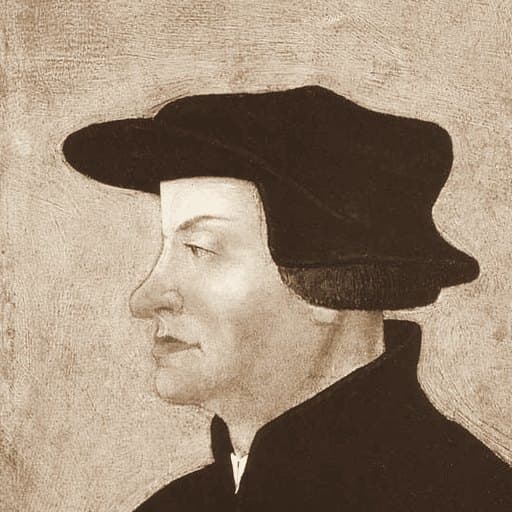
Image credit Huldrych Zwingli
1484–1531 · Reformed (Zurich)
Leader of the Zurich Reformation; his Sixty-Seven Articles (1523) set out the Reformed case. Killed at the battle of Kappel.
Read: The Sixty-Seven Articles (in Schaff, Creeds of Christendom, vol. 3)Free onlineWorth knowing: He supported the Zurich council's measures against the Anabaptists, under which Felix Manz was drowned in 1527.
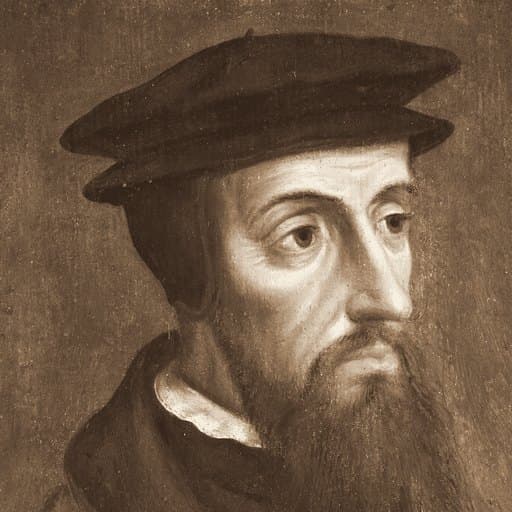
Image credit John Calvin
1509–1564 · Reformed (Geneva)
French reformer in Geneva whose Institutes of the Christian Religion became the classic statement of Reformed theology.
Read: Institutes of the Christian ReligionFree onlineWorth knowing: He supported the 1553 trial in Geneva that sent Michael Servetus to be burned for denying the Trinity (he asked for a less cruel death).
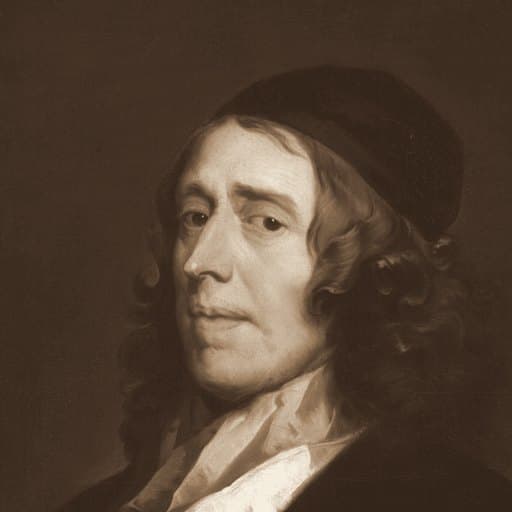
Image credit John Owen
1616–1683 · Reformed (English Congregationalist)
Puritan theologian, Oxford vice-chancellor and co-author of the Savoy Declaration (1658); wrote The Death of Death in the Death of Christ.
Read: Of the Mortification of Sin in BelieversFree online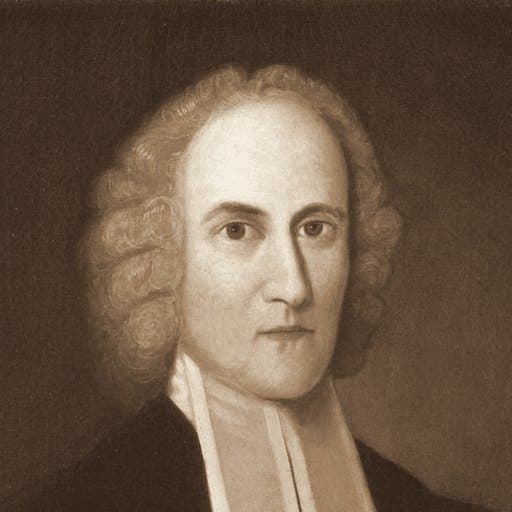
Image credit Jonathan Edwards
1703–1758 · Reformed (New England Congregationalist)
Northampton pastor and theologian of the Great Awakening, author of Religious Affections and Freedom of the Will.
Read: A Treatise Concerning Religious AffectionsFree onlineWorth knowing: He and his household owned enslaved people.
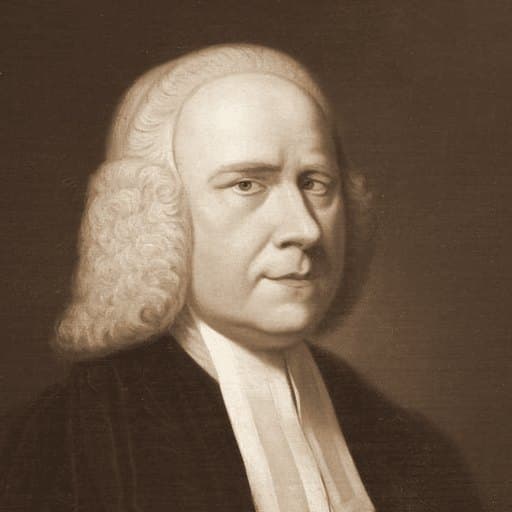
Image credit George Whitefield
1714–1770 · Calvinistic Methodist (Church of England priest)
Anglican evangelist whose open-air preaching in Britain and the American colonies drove the Great Awakening.
Read: Selected Sermons of George WhitefieldFree onlineWorth knowing: He campaigned to legalize slavery in Georgia and owned enslaved people at his Bethesda orphanage.
J. I. Packer
1926–2020 · Anglican (Reformed evangelical)
English-born theologian at Regent College, Vancouver, author of Knowing God and general editor of the ESV.
Read: Knowing GodMartyn Lloyd-Jones
1899–1981 · Reformed evangelical (Wales/London)
Welsh physician turned preacher who led Westminster Chapel, London, for thirty years.
Read: Spiritual Depression: Its Causes and Cure
Practices associated with Reformed / Presbyterian churches
Family worship
Gather your household for ten minutes most evenings. Read a short passage, sing a psalm or hymn, and pray together, with the children taking turns. It doesn't need to be polished. The steady habit of opening the Bible together at home matters more than any one evening.
Daily prayer, Bible reading and singing at home, led by the head of the household. The Church of Scotland approved the Directory for Family Worship on 24 August 1647.
Source: The Adopting Act of the Directory for Family Worship“The Church of Scotland Assembly at Edinburgh, Aug. 24, 1647”
Compare Reformed / Presbyterian teaching by topic
Reformed / Presbyterian coverage: 31 of 31 questions. Review status and scoring
Presbyterian Church in America / Orthodox Presbyterian Church · 29 topics available
No official position scored: Which is closest to what you think about Mary, the mother of Jesus? Which music helps you worship most?
Presbyterian Church (U.S.A.) · 29 topics available
No official position scored: When Christians pray for the sick, which is closest to what you think? In worship, what do you most hope for?
Christian Reformed Church in North America · 28 topics available
No official position scored: Which is closest to what you think about Mary, the mother of Jesus? Which music helps you worship most? In worship, what do you most hope for?
Read the positions and sources
Scripture and authority
When Christians disagree about what to believe, which is closest to what you think should settle it?
Presbyterian Church in America / Orthodox Presbyterian Church
Teaches: “The Bible alone has the final word. Creeds, councils and teachers are all tested by it.”
Source: Westminster Confession of Faith (OPC text; PCA text identical), 1.10“The supreme judge by which all controversies of religion are to be determined, and all decrees of councils, opinions of ancient writers, doctrines of men, and private spirits, are to be examined, and in whose sentence we are to rest, can be no other but the Holy Spirit speaking in the Scripture.”
Presbyterian Church (U.S.A.)
Teaches: “The Bible alone has the final word. Creeds, councils and teachers are all tested by it.” or “The Bible comes first, read together with the church's historic creeds and with reason and experience.”
Source: PC(USA) Book of Order 2025-2027, F-3.0107“that the Holy Scriptures are the only rule of faith and manners”
Christian Reformed Church in North America
Teaches: “The Bible alone has the final word. Creeds, councils and teachers are all tested by it.”
Makes room for: “The Bible comes first, read together with the church's historic creeds and with reason and experience.”
Source: CRC Covenant for Officebearers, Church Order Supplement, Art. 5-a“Acknowledging the authority of God’s Word, we submit to it in all matters of life and faith.”
Which is closest to what you think about creeds and confessions (written summaries of what a church believes)?
Presbyterian Church in America / Orthodox Presbyterian Church
Teaches: “A full confession of faith binds our pastors and teachers, because it faithfully sums up what Scripture teaches.”
Source: PCA Book of Church Order, 21-5, ordination vow 2“Do you sincerely receive and adopt the Confession of Faith and the Catechisms of this Church as containing the system of doctrine taught in the Holy Scripture?”
Presbyterian Church (U.S.A.)
Teaches: “The historic creeds matter, and our confessions guide us, but they leave room to read some things differently.”
Source: PC(USA) Book of Order 2025-2027, W-4.0404c (ordination question c)“Do you sincerely receive and adopt the essential tenets of the Reformed faith as expressed in the confessions of our church as authentic and reliable expositions of what Scripture leads us to believe and do”
Christian Reformed Church in North America
Teaches: “A full confession of faith binds our pastors and teachers, because it faithfully sums up what Scripture teaches.”
Makes room for: “The historic creeds matter, and our confessions guide us, but they leave room to read some things differently.”
Source: CRC Covenant for Officebearers, Church Order Supplement, Art. 5-a“We heartily believe and will promote and defend their doctrines faithfully”
Which is closest to how you see the Bible's truthfulness?
Presbyterian Church in America / Orthodox Presbyterian Church
Teaches: “The Bible is without error in everything it affirms, including what it says about history and the world.”
Some hold: “The Bible is fully trustworthy in everything it teaches about God, salvation and how to live.”
Source: PCA Book of Church Order, 21-5, ordination vow 1“Do you believe the Scriptures of the Old and New Testaments, as originally given, to be the inerrant Word of God, the only infallible rule of faith and practice?”
Presbyterian Church (U.S.A.)
Teaches: “The Bible is God's word through human writers. It tells the truth about Christ, and careful scholarship helps us read it.”
Some hold: “The Bible is fully trustworthy in everything it teaches about God, salvation and how to live.”
Makes room for: “The Bible holds God's word alongside its writers' own views, and we discern which parts speak for God today.”
Source: PC(USA) Book of Order 2025-2027, W-4.0404b (ordination question b)“the unique and authoritative witness to Jesus Christ in the Church universal, and God’s Word to you”
Christian Reformed Church in North America
Teaches: “The Bible is without error in everything it affirms, including what it says about history and the world.” or “The Bible is fully trustworthy in everything it teaches about God, salvation and how to live.”
Source: Belgic Confession, Art. 5“And we believe without a doubt all things contained in them”
Salvation and grace
When God puts a sinner right with Himself, which is closest to what you think happens?
Presbyterian Church in America / Orthodox Presbyterian Church
Teaches: “God forgives us and counts us righteous for Christ's sake, crediting His righteousness to us. We receive this by faith alone.”
Source: Westminster Confession of Faith (OPC text; PCA text identical), 11.1“not by infusing righteousness into them, but by pardoning their sins, and by accounting and accepting their persons as righteous”
Presbyterian Church (U.S.A.)
Teaches: “God forgives us and counts us righteous for Christ's sake, crediting His righteousness to us. We receive this by faith alone.”
Source: PC(USA) Book of Order 2025-2027, F-2.04“In its confessions, the Presbyterian Church (U.S.A.) upholds the affirmations of the Protestant Reformation.”
Christian Reformed Church in North America
Teaches: “God forgives us and counts us righteous for Christ's sake, crediting His righteousness to us. We receive this by faith alone.”
Source: Heidelberg Catechism, Q&A 60“God grants and credits to me the perfect satisfaction, righteousness, and holiness of Christ”
Which is closest to how you think God usually gives people His saving grace?
Presbyterian Church in America / Orthodox Presbyterian Church
Teaches: “Through His Word preached and the sacraments, which the Holy Spirit uses to create and strengthen faith.”
Makes room for: “When a person hears the gospel and personally trusts Christ. Baptism and the Lord's Supper then show it.”
Source: Westminster Shorter Catechism, Q88“are his ordinances, especially the word, sacraments, and prayer; all which are made effectual to the elect for salvation”
Presbyterian Church (U.S.A.)
Teaches: “Through His Word preached and the sacraments, which the Holy Spirit uses to create and strengthen faith.”
Source: PC(USA) Book of Order 2025-2027, W-3.0401“Sacraments are the Word of God enacted and sealed in the life of the Church, the body of Christ.”
Christian Reformed Church in North America
Teaches: “Through His Word preached and the sacraments, which the Holy Spirit uses to create and strengthen faith.”
Source: Heidelberg Catechism, Q&A 65“Q. It is through faith alone that we share in Christ and all his benefits: where then does that faith come from?”
Which is closest to what you think about whom Christ died to save?
Presbyterian Church in America / Orthodox Presbyterian Church
Teaches: “Christ died to save the people the Father gave Him, and His death surely saves every one of them.”
Some hold: “Christ's death is enough for all people, and God intended it to surely save those He chose.”
Source: Westminster Confession of Faith (OPC text; PCA text identical), 3.6“Neither are any other redeemed by Christ, effectually called, justified, adopted, sanctified, and saved, but the elect only.”
Presbyterian Church (U.S.A.)
Teaches: “Christ died for every person, so that anyone who turns to Him can be saved.”
Some hold: “Christ's death is enough for all people, and God intended it to surely save those He chose.” or “Christ died to save the people the Father gave Him, and His death surely saves every one of them.”
Makes room for: “Christ's death will in the end bring every person back to God.”
Source: PC(USA) Book of Confessions (2016), Declaratory Statement to the Westminster Confession, 6.192“the doctrine of God’s eternal decree is held in harmony with the doctrine of his love to all mankind, his gift of his Son to be the propitiation for the sins of the whole world”
Christian Reformed Church in North America
Teaches: “Christ's death is enough for all people, and God intended it to surely save those He chose.” or “Christ died to save the people the Father gave Him, and His death surely saves every one of them.”
Source: Canons of Dort, II.3, II.8“it is of infinite value and worth, more than sufficient to atone for the sins of the whole world”
Which is closest to what you think about God's choosing and our choice?
Presbyterian Church in America / Orthodox Presbyterian Church
Teaches: “Before creation God chose His people, not for anything He saw in them, and His grace surely brings them to faith.”
Source: Westminster Confession of Faith (OPC text; PCA text identical), 3.5“without any foresight of faith, or good works, or perseverance in either of them, or any other thing in the creature, as conditions, or causes moving him thereunto”
Presbyterian Church (U.S.A.)
Teaches: “Before creation God chose His people, not for anything He saw in them, and His grace surely brings them to faith.” or “Salvation is God's work alone, and He chose us in Christ. He chose no one to be lost; the lost refuse His grace.”
Some hold: “God's choosing and our free choice are both true in Scripture, and I don't think we need a system to fit them together.”
Makes room for: “God's grace goes before everyone and frees us to respond. God chooses in Christ those He knows will believe.”
Source: PC(USA) Book of Confessions (2016), Declaratory Statement to the Westminster Confession, 6.192“that concerning those who perish, the doctrine of God’s eternal decree is held in harmony with the doctrine that God desires not the death of any sinner”
Christian Reformed Church in North America
Teaches: “Before creation God chose His people, not for anything He saw in them, and His grace surely brings them to faith.”
Source: Canons of Dort, I.7“Those chosen were neither better nor more deserving than the others, but lay with them in the common misery.”
Which is closest to what you think: can a true believer fall away and be lost?
Presbyterian Church in America / Orthodox Presbyterian Church
Teaches: “No. Everyone God truly saves, He keeps, and they will go on in faith to the end.”
Source: Westminster Confession of Faith (OPC text; PCA text identical), 17.1“can neither totally nor finally fall away from the state of grace, but shall certainly persevere therein to the end, and be eternally saved”
Presbyterian Church (U.S.A.)
Teaches: “No. Everyone God truly saves, He keeps, and they will go on in faith to the end.”
Some hold: “Yes. A believer can turn away from Christ and be lost, but while we live His grace keeps calling us back.”
Source: PC(USA) Book of Confessions (2016), Westminster Confession, 6.095 (ch. XVII.1)“can neither totally nor finally fall away from the state of grace: but shall certainly persevere therein to the end”
Christian Reformed Church in North America
Teaches: “No. Everyone God truly saves, He keeps, and they will go on in faith to the end.”
Source: Canons of Dort, V.8“they neither forfeit faith and grace totally nor remain in their downfalls to the end and are lost”
Which is closest to what you think about knowing where you stand with God?
Presbyterian Church in America / Orthodox Presbyterian Church
Teaches: “Every true believer can be certain now of being saved in the end, because it rests on God's promise.”
Source: Westminster Confession of Faith (OPC text; PCA text identical), 18.1“may, in this life, be certainly assured that they are in the state of grace”
Presbyterian Church (U.S.A.)
Teaches: “Every true believer can be certain now of being saved in the end, because it rests on God's promise.”
Some hold: “We trust God and follow Jesus together, and certainty isn't something we spend much time on.”
Source: PC(USA) Book of Confessions (2016), Heidelberg Catechism, 4.001 (Q&A 1)“Because I belong to him, Christ, by his Holy Spirit, assures me of eternal life”
Christian Reformed Church in North America
Teaches: “Every true believer can be certain now of being saved in the end, because it rests on God's promise.”
Source: Canons of Dort, V.9“By this faith they firmly believe that they are and always will remain true and living members of the church, and that they have the forgiveness of sins and eternal life.”
Which is closest to what you think about how God makes believers holy?
Presbyterian Church in America / Orthodox Presbyterian Church
Teaches: “Holiness grows over a whole lifetime. Sin remains in us until we die, though it no longer rules us.”
Source: Westminster Confession of Faith (OPC text; PCA text identical), 13.2“yet imperfect in this life, there abiding still some remnants of corruption in every part”
Presbyterian Church (U.S.A.)
Teaches: “Holiness grows over a whole lifetime. Sin remains in us until we die, though it no longer rules us.”
Some hold: “Holiness is following Jesus in daily obedience, with a church that encourages and corrects us.”
Source: PC(USA) Book of Confessions (2016), Westminster Confession, 6.076 (ch. XIII.2)“yet imperfect in this life: there abideth still some remnants of corruption in every part”
Christian Reformed Church in North America
Teaches: “Holiness grows over a whole lifetime. Sin remains in us until we die, though it no longer rules us.”
Source: Heidelberg Catechism, Q&A 114“In this life even the holiest have only a small beginning of this obedience.”
The church
Which is closest to how you think the church should be led?
Presbyterian Church in America / Orthodox Presbyterian Church
Teaches: “By elders, pastors and lay elders together, with local churches joined in regional and national assemblies.”
Source: PCA Book of Church Order, 1-5“Ecclesiastical jurisdiction is not a several, but a joint power, to be exercised by presbyters in courts.”
Presbyterian Church (U.S.A.)
Teaches: “By elders, pastors and lay elders together, with local churches joined in regional and national assemblies.”
Source: PC(USA) Book of Order 2025-2027, F-3.0202“This church shall be governed by presbyters, that is, ruling elders and teaching elders”
Christian Reformed Church in North America
Teaches: “By elders, pastors and lay elders together, with local churches joined in regional and national assemblies.”
Source: CRC Church Order, Art. 26“The assemblies of the church are the council, the classis, and the synod.”
Which is closest to what you think about who may be ordained as a pastor or priest?
Presbyterian Church in America / Orthodox Presbyterian Church
Teaches: “Only men may serve as pastors or elders, and women serve in many other vital ministries.”
Source: PCA Book of Church Order, 7-2“In accord with Scripture, these offices are open to men only.”
Presbyterian Church (U.S.A.)
Teaches: “Both men and women may be called by God and ordained as pastors.”
Source: PC(USA) Book of Order 2025-2027, G-2.0101“exercising his authority by the ministry of women and men”
Christian Reformed Church in North America
Teaches: “Each region or church body should decide this for itself, and both views can live together.”
Some hold: “Only men may serve as pastors or elders, and women serve in many other vital ministries.” or “Both men and women may be called by God and ordained as pastors.”
Source: CRC Church Order, Supplement, Art. 3-a“All congregations may, but will not be required to, allow women to serve in the office of minister, elder, deacon, or commissioned pastor.”
Which is closest to what you think about ordination in an unbroken line from the apostles?
Presbyterian Church in America / Orthodox Presbyterian Church
Teaches: “What matters is that ministers hold to the apostles' teaching and are rightly called and ordained by the church.”
Source: Westminster Confession of Faith (OPC text; PCA text identical), 27.4“neither of which may be dispensed by any, but by a minister of the Word lawfully ordained”
Presbyterian Church (U.S.A.)
Teaches: “What matters is that ministers hold to the apostles' teaching and are rightly called and ordained by the church.”
Source: PC(USA) Book of Order 2025-2027, W-4.0401“In ordination the church sets apart with prayer and the laying on of hands those who have been called by God through the voice of the church”
Christian Reformed Church in North America
Teaches: “What matters is that ministers hold to the apostles' teaching and are rightly called and ordained by the church.”
Source: Belgic Confession, Art. 31“ministers of the Word of God, elders, and deacons ought to be chosen to their offices by a legitimate election of the church”
Which is closest to what you think about Christians, war and oaths?
Presbyterian Church in America / Orthodox Presbyterian Church
Teaches: “Christians may serve in the military for a just cause and may take an oath when the law asks for one.”
Source: Westminster Confession of Faith (OPC text; PCA text identical), 23.2, 22.2“they may lawfully, now under the new testament, wage war, upon just and necessary occasion”
Presbyterian Church (U.S.A.)
Teaches: “Christians may serve in the military for a just cause and may take an oath when the law asks for one.” or “Christians should work for peace, and each believer may follow conscience about serving in the military.”
Source: PC(USA) Book of Confessions (2016), Westminster Confession, 6.128 (ch. XXIII.2)“they may lawfully, now under the New Testament, wage war upon just and necessary occasions”
Christian Reformed Church in North America
Teaches: “Christians may serve in the military for a just cause and may take an oath when the law asks for one.”
Some hold: “Christians should work for peace, and each believer may follow conscience about serving in the military.”
Source: Heidelberg Catechism, Q&A 101“Yes, when the government demands it, or when necessity requires it”
Baptism and the Lord’s Supper
Which is closest to what you think about who should be baptized?
Presbyterian Church in America / Orthodox Presbyterian Church
Teaches: “Believers and their children. Babies of Christian families should be baptized and raised in the faith.”
Source: Westminster Confession of Faith (OPC text; PCA text identical), 28.4“but also the infants of one, or both, believing parents, are to be baptized”
Presbyterian Church (U.S.A.)
Teaches: “Believers and their children. Babies of Christian families should be baptized and raised in the faith.”
Source: PC(USA) Book of Order 2025-2027, W-3.0402“Both believers and their children are included in God’s covenant love.”
Christian Reformed Church in North America
Teaches: “Believers and their children. Babies of Christian families should be baptized and raised in the faith.”
Source: Heidelberg Catechism, Q&A 74“Q. Should infants also be baptized? A. Yes.”
Which is closest to what you think happens in baptism?
Presbyterian Church in America / Orthodox Presbyterian Church
Teaches: “A sign and seal of God's promise. God uses it to mark us as His, though grace isn't tied to that moment.”
Source: Westminster Confession of Faith (OPC text; PCA text identical), 28.1, 28.6“to be unto him a sign and seal of the covenant of grace”
Presbyterian Church (U.S.A.)
Teaches: “A sign and seal of God's promise. God uses it to mark us as His, though grace isn't tied to that moment.”
Source: PC(USA) Book of Order 2025-2027, W-3.0402“Baptism is the sign and seal of our incorporation into Jesus Christ.”
Christian Reformed Church in North America
Teaches: “A sign and seal of God's promise. God uses it to mark us as His, though grace isn't tied to that moment.”
Source: Heidelberg Catechism, Q&A 66“Sacraments are visible, holy signs and seals.”
Which is closest to what you think about how baptism should be done?
Presbyterian Church in America / Orthodox Presbyterian Church
Teaches: “Pouring, sprinkling or immersion are all fine. The water and the name of the Trinity are what matter.”
Some hold: “Usually by pouring water on the head, as a sign of the Holy Spirit poured out.”
Source: Westminster Confession of Faith (OPC text; PCA text identical), 28.3“Dipping of the person into the water is not necessary; but baptism is rightly administered by pouring, or sprinkling water upon the person.”
Presbyterian Church (U.S.A.)
Teaches: “Pouring, sprinkling or immersion are all fine. The water and the name of the Trinity are what matter.”
Source: PC(USA) Book of Order 2025-2027, W-3.0407“may be applied with the hand, by pouring, or through immersion”
Christian Reformed Church in North America
Teaches: “Pouring, sprinkling or immersion are all fine. The water and the name of the Trinity are what matter.”
Some hold: “Usually by pouring water on the head, as a sign of the Holy Spirit poured out.”
Source: Belgic Confession, Art. 34“just as water washes away the dirt of the body when it is poured on us and also is seen on the bodies of those who are baptized when it is sprinkled on them”
When the church shares the bread and cup, which is closest to what you think?
Presbyterian Church in America / Orthodox Presbyterian Church
Teaches: “Christ is truly present by His Spirit, and believers feed on Him by faith, while the bread stays bread.”
Source: Westminster Confession of Faith (OPC text; PCA text identical), 29.7“yet, as really, but spiritually, present to the faith of believers in that ordinance, as the elements themselves are to their outward senses”
Presbyterian Church (U.S.A.)
Teaches: “Christ is truly present by His Spirit, and believers feed on Him by faith, while the bread stays bread.”
Some hold: “We remember Christ's death, proclaim it and look for His return, with the bread and cup as signs.”
Source: PC(USA) Book of Order 2025-2027, W-3.0409“When we gather at the Lord’s Supper the Spirit draws us into Christ’s presence”
Christian Reformed Church in North America
Teaches: “Christ is truly present by His Spirit, and believers feed on Him by faith, while the bread stays bread.”
Source: Belgic Confession, Art. 35“when appropriated and received spiritually by faith”
Which is closest to what you think about how often a church should share the Lord's Supper?
Presbyterian Church in America / Orthodox Presbyterian Church
Teaches: “Regularly, perhaps monthly or quarterly. It's special, but it isn't part of every service.”
Some hold: “Every Sunday, because the first Christians broke bread on the first day of each week.”
Source: PCA Book of Church Order, 58-1“The Communion, or Supper of the Lord, is to be observed frequently; the stated times to be determined by the Session of each congregation”
Presbyterian Church (U.S.A.)
Teaches: “Every Sunday, because the first Christians broke bread on the first day of each week.” or “Regularly, perhaps monthly or quarterly. It's special, but it isn't part of every service.”
Some hold: “Every Sunday, as the high point of worship, and on many other days too.”
Source: PC(USA) Book of Order 2025-2027, W-3.0409“When local circumstances call for the Lord’s Supper to be celebrated less frequently, the session may approve other schedules for celebration, in no case less than quarterly.”
Christian Reformed Church in North America
Teaches: “Regularly, perhaps monthly or quarterly. It's special, but it isn't part of every service.”
Some hold: “Every Sunday, because the first Christians broke bread on the first day of each week.”
Source: CRC Church Order, Art. 60“The Lord’s Supper shall be administered at least once every three months”
Which is closest to what you think Christ gave His church to keep as lasting rites?
Presbyterian Church in America / Orthodox Presbyterian Church
Teaches: “Two sacraments, baptism and the Lord's Supper, through which God gives His grace.”
Source: Westminster Confession of Faith (OPC text; PCA text identical), 27.4“There be only two sacraments ordained by Christ our Lord in the Gospel; that is to say, baptism, and the Supper of the Lord”
Presbyterian Church (U.S.A.)
Teaches: “Two sacraments, baptism and the Lord's Supper, through which God gives His grace.”
Source: PC(USA) Book of Order 2025-2027, W-3.0401“The Reformed tradition recognizes the Sacraments of Baptism and the Lord’s Supper (also called Eucharist or Holy Communion) as having been instituted by the Lord Jesus Christ”
Christian Reformed Church in North America
Teaches: “Two sacraments, baptism and the Lord's Supper, through which God gives His grace.”
Source: Heidelberg Catechism, Q&A 68“Two: holy baptism and the holy supper.”
The Holy Spirit’s gifts
Which is closest to what you think about gifts like prophecy, tongues and healing today?
Presbyterian Church in America / Orthodox Presbyterian Church
Teaches: “The miraculous sign gifts were for the apostles' time and ended when Scripture was complete.”
Some hold: “They can still happen, but the church should test them with care, and they aren't the focus of church life.”
Makes room for: “The Spirit gives gifts to every believer for building up the church, and I don't sort them into kinds.”
Source: Westminster Confession of Faith (OPC text; PCA text identical), 1.1“those former ways of God’s revealing his will unto his people being now ceased”
Presbyterian Church (U.S.A.)
Teaches: “They can still happen, but the church should test them with care, and they aren't the focus of church life.” or “The Spirit gives gifts to every believer for building up the church, and I don't sort them into kinds.”
Makes room for: “All the gifts in the New Testament are for today, and churches should seek them and make room for them.”
Source: PC(USA) Book of Order (2023-2025), W-1.0105 / W-2“To each member of Christ's body, the Spirit gives gifts for ministry in the Church and mission in the world.”
Christian Reformed Church in North America
Teaches: “They can still happen, but the church should test them with care, and they aren't the focus of church life.”
Some hold: “All the gifts in the New Testament are for today, and churches should seek them and make room for them.” or “The Spirit gives gifts to every believer for building up the church, and I don't sort them into kinds.”
Makes room for: “The miraculous sign gifts were for the apostles' time and ended when Scripture was complete.”
Source: CRCNA Position Statement: Pentecostalism (Synods 1973, 2009), Position; Synod 2009 counsel“Acknowledge the gift of prophecy today, subject to the overriding authority of Scripture and the discernment of the Christian body.”
Which is closest to what you think about being baptized (or filled) with the Holy Spirit?
Presbyterian Church in America / Orthodox Presbyterian Church
Teaches: “Every believer receives the Spirit on coming to faith, and we can be filled again and again.”
Makes room for: “The Spirit is given through God's Word and baptism, sealed in some churches by anointing or the laying on of hands (at baptism itself in Orthodox and Eastern Catholic churches, later in Western confirmation).”
Source: Westminster Shorter Catechism, Q&A 30“The Spirit applieth to us the redemption purchased by Christ, by working faith in us, and thereby uniting us to Christ in our effectual calling.”
Presbyterian Church (U.S.A.)
Teaches: “Every believer receives the Spirit on coming to faith, and we can be filled again and again.”
Some hold: “The Spirit is given through God's Word and baptism, sealed in some churches by anointing or the laying on of hands (at baptism itself in Orthodox and Eastern Catholic churches, later in Western confirmation).”
Source: PC(USA) Book of Confessions (2016), Heidelberg Catechism, 4.053 (Q&A 53)“Second, that the Spirit is given also to me,”
Christian Reformed Church in North America
Teaches: “Every believer receives the Spirit on coming to faith, and we can be filled again and again.”
Makes room for: “The Spirit is given through God's Word and baptism, sealed in some churches by anointing or the laying on of hands (at baptism itself in Orthodox and Eastern Catholic churches, later in Western confirmation).”
Source: CRCNA Position Statement: Pentecostalism (Synods 1973, 2009), Position“According to biblical teaching, a believer receives baptism in or with the Holy Spirit at the time of conversion.”
When Christians pray for the sick, which is closest to what you think?
Presbyterian Church in America / Orthodox Presbyterian Church
Teaches: “God heals, sometimes by miracle and often through medicine. We pray, use both and trust His will.” or “God heals as He wills, usually through ordinary means. We pray, but we don't expect miracles as a pattern.”
Source: Westminster Confession of Faith, ch. 5.3“God, in his ordinary providence, maketh use of means, yet is free to work without, above, and against them, at his pleasure.”
Presbyterian Church (U.S.A.)
Teaches: “God heals, sometimes by miracle and often through medicine. We pray, use both and trust His will.”
Some hold: “The church anoints the sick in a sacrament that gives grace for body and soul, and sometimes healing.”
Makes room for: “Praying for the sick with laying on of hands is part of every believer's ministry, as Jesus did when He announced the kingdom.” or “God heals as He wills, usually through ordinary means. We pray, but we don't expect miracles as a pattern.”
Not yet checked against the primary text, so the quiz doesn’t score this.
Source: PC(USA) Book of Order (2023-2025), W-5.0204 (Service of Healing)
Christian Reformed Church in North America
Teaches: “God heals, sometimes by miracle and often through medicine. We pray, use both and trust His will.”
Some hold: “God heals as He wills, usually through ordinary means. We pray, but we don't expect miracles as a pattern.”
Source: CRCNA Position Statement: Pentecostalism (Synod 2009 counsel), Synod 2009 counsel“Accept with gratitude that God continues to give physical and emotional healing in response to prayer, both through his gift of medical science, and through medically inexplicable ways.”
Mary and the saints
Which is closest to what you think about the saints in heaven?
Presbyterian Church in America / Orthodox Presbyterian Church
Teaches: “We thank God for the saints and follow their example, but we pray to God alone.” or “Every believer, living or dead, is a saint. We remember faithful Christians without special honor for some.”
Makes room for: “The saints in heaven pray for the church, but Scripture doesn't teach us to ask them to.”
Source: Westminster Confession of Faith (OPC text; PCA text identical), 21.2“Religious worship is to be given to God, the Father, Son, and Holy Ghost; and to him alone; not to angels, saints, or any other creature”
Presbyterian Church (U.S.A.)
Teaches: “We thank God for the saints and follow their example, but we pray to God alone.” or “Every believer, living or dead, is a saint. We remember faithful Christians without special honor for some.”
Source: PC(USA) Book of Confessions (2016), Second Helvetic Confession, 5.025“we do not adore, worship, or pray to the saints in heaven, or to other gods, and we do not acknowledge them as our intercessors or mediators”
Christian Reformed Church in North America
Teaches: “We thank God for the saints and follow their example, but we pray to God alone.” or “Every believer, living or dead, is a saint. We remember faithful Christians without special honor for some.”
Source: Heidelberg Catechism, Q&A 94“and prayer to saints or to other creatures”
Which is closest to what you think about Mary, the mother of Jesus?
Presbyterian Church in America / Orthodox Presbyterian Church
Teaches: “She was a godly woman God chose to bear Jesus, and an example of faith like other believers.”
Some hold: “She is blessed among women. We honor her as a model of faith, without the later dogmas of her Immaculate Conception and Assumption.”
Not yet checked against the primary text, so the quiz doesn’t score this.
Source: Westminster Confession of Faith (OPC text; PCA text identical), 8.2
Presbyterian Church (U.S.A.)
Teaches: “She is blessed among women. We honor her as a model of faith, without the later dogmas of her Immaculate Conception and Assumption.” or “She was a godly woman God chose to bear Jesus, and an example of faith like other believers.”
Source: PC(USA) Book of Confessions (2016), Second Helvetic Confession, 5.064“born of the ever virgin Mary”
Christian Reformed Church in North America
Teaches: “She was a godly woman God chose to bear Jesus, and an example of faith like other believers.”
Some hold: “She is blessed among women. We honor her as a model of faith, without the later dogmas of her Immaculate Conception and Assumption.”
Not yet checked against the primary text, so the quiz doesn’t score this.
Last things
Which is closest to what you think about Christ's return and the thousand years in Revelation 20?
Presbyterian Church in America / Orthodox Presbyterian Church
Teaches: “The thousand years is the present age of Christ's reign. He will return once, to raise the dead and judge.”
Some hold: “After a time of great trouble, Christ will return and reign on earth for a thousand years before the final judgment.” or “The gospel will spread through much of the world in a long age of peace before Christ returns.”
Source: Westminster Larger Catechism, Q&A 88“Immediately after the resurrection shall follow the general and final judgment of angels and men”
Presbyterian Church (U.S.A.)
Teaches: “Christ will return in glory to judge the living and the dead, and I don't think we need a timeline.”
Some hold: “The thousand years is the present age of Christ's reign. He will return once, to raise the dead and judge.”
Source: PC(USA) Book of Confessions (2016), Westminster Confession, 6.180 (ch. XXXIII.1)“God hath appointed a day, wherein he will judge the world in righteousness by Jesus Christ”
Christian Reformed Church in North America
Teaches: “The thousand years is the present age of Christ's reign. He will return once, to raise the dead and judge.”
Some hold: “Christ will return in glory to judge the living and the dead, and I don't think we need a timeline.”
Source: Belgic Confession, Art. 37“our Lord Jesus Christ will come from heaven, bodily and visibly, as he ascended, with great glory and majesty, to declare himself the judge of the living and the dead”
Which is closest to what you think happens to believers when they die, before the final resurrection?
Presbyterian Church in America / Orthodox Presbyterian Church
Teaches: “They go straight to be with Christ, fully forgiven, and wait for the resurrection of the body.”
Source: Westminster Confession of Faith (OPC text; PCA text identical), 32.1“the souls of the righteous, being then made perfect in holiness, are received into the highest heavens”
Presbyterian Church (U.S.A.)
Teaches: “They go straight to be with Christ, fully forgiven, and wait for the resurrection of the body.”
Makes room for: “They rest in Christ, and the church keeps praying for them as they wait for the resurrection.”
Source: PC(USA) Book of Confessions (2016), Heidelberg Catechism, 4.057 (Q&A 57)“Not only will my soul be taken immediately after this life to Christ its head”
Christian Reformed Church in North America
Teaches: “They go straight to be with Christ, fully forgiven, and wait for the resurrection of the body.”
Source: Heidelberg Catechism, Q&A 57“Not only will my soul be taken immediately after this life to Christ its head”
Worship
Which kind of service feels most like worship to you?
Presbyterian Church in America / Orthodox Presbyterian Church
Teaches: “A plain service of psalms or hymns, prayer and careful Bible preaching, ordered by what Scripture commands.”
Source: Westminster Confession of Faith (OPC text; PCA text identical), 21.1“he may not be worshiped according to the imaginations and devices of men, or the suggestions of Satan, under any visible representation, or any other way not prescribed in the Holy Scripture”
Presbyterian Church (U.S.A.)
Teaches: “A set order from a prayer book or hymnal, with Scripture readings, confession, the creed and the Lord's Prayer.”
Some hold: “A plain service of psalms or hymns, prayer and careful Bible preaching, ordered by what Scripture commands.” or “A long time of singing, then preaching, with freedom for spontaneous prayer and response.”
Source: PC(USA) Book of Order 2025-2027, W-3.0205“Having praised the holiness of God, we must also face the sinful state of the world and of our lives”
Christian Reformed Church in North America
Teaches: “A set order from a prayer book or hymnal, with Scripture readings, confession, the creed and the Lord's Prayer.” or “A plain service of psalms or hymns, prayer and careful Bible preaching, ordered by what Scripture commands.”
Some hold: “A long time of singing, then preaching, with freedom for spontaneous prayer and response.”
Source: CRCNA Church Order and Its Supplements (2024), Art. 51-a“The congregation shall assemble for worship on the Lord's Day, to hear God's Word, to receive the sacraments, to engage in praise and prayer, and to present gifts of gratitude.”
Which music helps you worship most?
Presbyterian Church in America / Orthodox Presbyterian Church
Teaches: “Hymns with organ or piano, and a choir.”
Some hold: “Voices alone, singing hymns and psalms together in harmony.” or “A worship band leading contemporary songs.”
Not yet checked against the primary text, so the quiz doesn’t score this.
Presbyterian Church (U.S.A.)
Teaches: “Hymns with organ or piano, and a choir.”
Some hold: “A worship band leading contemporary songs.” or “Gospel music, with choir, organ and drums, and freedom to respond.”
Source: PC(USA) Book of Order 2025-2027, W-2.0202“the purpose of rehearsed choirs and other musicians is to lead and support the congregation in the singing of prayer”
Christian Reformed Church in North America
Teaches: “Hymns with organ or piano, and a choir.” or “A worship band leading contemporary songs.”
Makes room for: “Voices alone, singing hymns and psalms together in harmony.” or “Gospel music, with choir, organ and drums, and freedom to respond.”
Not yet checked against the primary text, so the quiz doesn’t score this.
How much should the church year shape worship?
Presbyterian Church in America / Orthodox Presbyterian Church
Teaches: “A little. We mark Christmas and Easter and plan the rest around preaching series.” or “Every Lord's Day is the feast, and we don't keep other holy days.”
Some hold: “Some. We keep the main seasons: Advent, Christmas, Lent, Holy Week and Easter.”
Source: OPC Directory for Public Worship, ch. I (The Lord's Day)“The Lord’s Day is a day of holy convocation, the day on which the Lord calls his people to assemble for public worship.”
Presbyterian Church (U.S.A.)
Teaches: “Some. We keep the main seasons: Advent, Christmas, Lent, Holy Week and Easter.”
Some hold: “A lot. The whole year follows the feasts and fasts, with readings set for each day.”
Makes room for: “A little. We mark Christmas and Easter and plan the rest around preaching series.”
Source: PC(USA) Book of Order 2025-2027, W-1.0202“This pattern of the Christian year keeps us centered in Christ”
Christian Reformed Church in North America
Teaches: “Some. We keep the main seasons: Advent, Christmas, Lent, Holy Week and Easter.” or “A little. We mark Christmas and Easter and plan the rest around preaching series.”
Source: CRC Church Order, Art. 51c“Worship services shall be held in observance of Christmas, Good Friday, Easter, Ascension Day, and Pentecost”
In worship, what do you most hope for?
Presbyterian Church in America / Orthodox Presbyterian Church
Teaches: “Clear preaching of God's Word that teaches and convicts, with heartfelt singing.”
Source: Westminster Shorter Catechism, Q89“The Spirit of God maketh the reading, but especially the preaching, of the word, an effectual means of convincing and converting sinners”
Presbyterian Church (U.S.A.)
Teaches: “Clear preaching of God's Word that teaches and convicts, with heartfelt singing.”
Some hold: “Reverent, ordered beauty, with the Lord's Supper at the center.”
Makes room for: “A close church family sharing life, singing together and caring for one another.”
Not yet checked against the primary text, so the quiz doesn’t score this.
Christian Reformed Church in North America
Teaches: “Clear preaching of God's Word that teaches and convicts, with heartfelt singing.”
Makes room for: “Reverent, ordered beauty, with the Lord's Supper at the center.” or “A close church family sharing life, singing together and caring for one another.”
Not yet checked against the primary text, so the quiz doesn’t score this.