
Roman Catholic beliefs: what the Roman Catholic tradition teaches
The Catholic Church believes it is the one Church Christ founded on the apostles, with the Pope, the successor of Peter, as the visible source of its unity. It receives God's revelation in Sacred Scripture and Sacred Tradition, authentically interpreted by the Magisterium, and lives by seven sacraments, above all the Eucharist, 'the source and summit of the Christian life'.
Worship: The Mass, a fixed liturgy centred on the Eucharist every Sunday and daily, through the full church year. Eastern Catholic Churches celebrate the Divine Liturgy or their own ancient rites.
Eastern Catholic Churches (among them the Ukrainian Greek Catholic, Melkite, Maronite, Chaldean, Syro-Malabar, Syro-Malankara, Armenian and Coptic Catholic Churches) are in full communion with Rome and share its dogmas, including papal primacy, the Marian dogmas and the seven sacraments. They worship in their own rites, many give chrismation to infants at baptism, and many ordain married men as priests. Someone close to this branch would likely be close to them too. This coding rests on Latin Church sources and hasn't been checked separately for each Eastern Catholic Church.
Take the quizVisit a church
Roman Catholic Church
Catholic Mass TimesMassTimes is a Catholic ministry that lists churches and Mass times.
These are each tradition's own church directories. We don't review individual congregations.
Read more
- Catechism of the Catholic Church — The Catholic ChurchFree online
The Church's own full summary of the faith, built around the Creed, the sacraments, the commandments, and prayer.
- Compendium of the Catechism of the Catholic Church — The Catholic ChurchFree online
A shorter question-and-answer version of the Catechism, good if the full one feels like a lot.
- Catholic Christianity — Peter Kreeft
A Catholic philosophy professor walks through the Catechism in friendly, everyday language.
Confessions and statements from Roman Catholic churches
Figures and practice companions
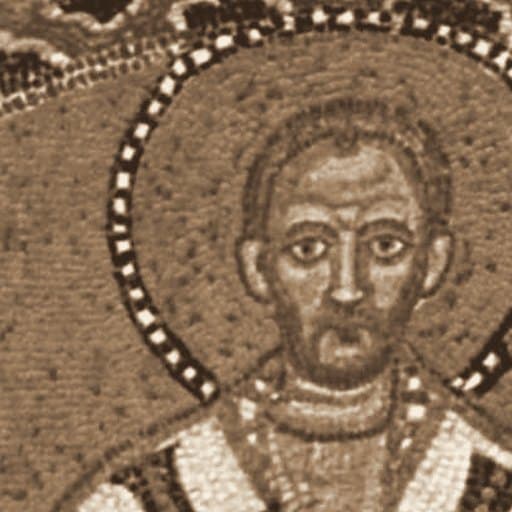
as depicted by Byzantine mosaicist (Hagia Sophia, Istanbul)Image credit John Chrysostom
c. 347–407 · Early church (Antioch and Constantinople)
Archbishop of Constantinople, called "golden-mouthed" for his preaching through whole books of the Bible.
Read: On the Priesthood (Nicene and Post-Nicene Fathers, series 1, vol. 9)Free onlineWorth knowing: His eight homilies Against the Jews are harshly anti-Jewish and were later used to justify hostility to Jews.
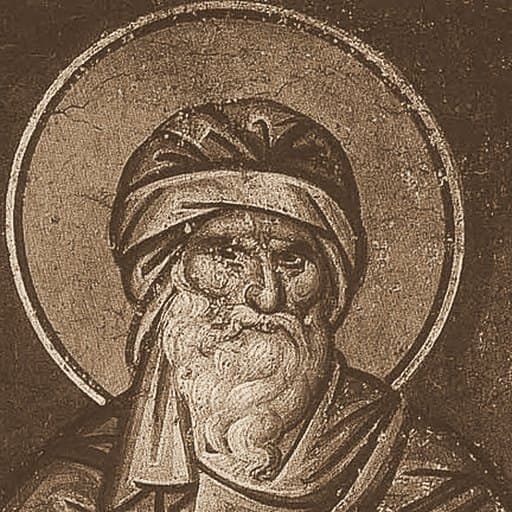
as depicted by Unknown artistImage credit John of Damascus
c. 675–749 · Eastern church (Syria)
Monk near Jerusalem under Umayyad rule who summed up the Greek Fathers and defended icons.
Read: An Exact Exposition of the Orthodox Faith (Nicene and Post-Nicene Fathers, series 2, vol. 9)Free online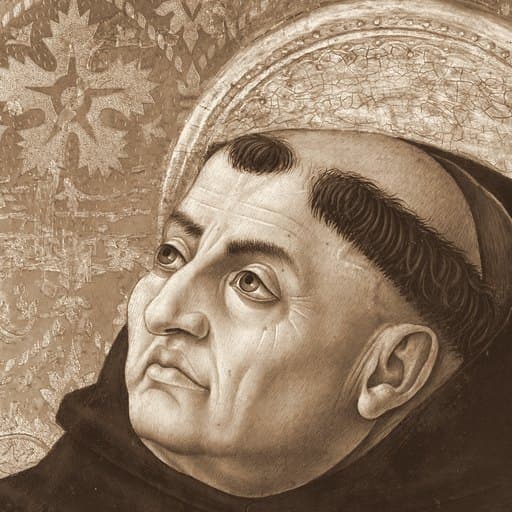
Image credit Thomas Aquinas
1225–1274 · Catholic (Dominican)
Dominican friar whose Summa Theologiae joined Scripture, the Fathers and Aristotle; a Doctor of the Church.
Read: Summa TheologicaFree onlineWorth knowing: He argued that obstinate heretics could rightly be handed to the state for execution.
Benedict of Nursia
c. 480–c. 547 · Western monasticism (Italy)
Founder of Monte Cassino whose Rule set the daily rhythm of prayer, work and sacred reading for Western monks.
Read: The Rule of St. BenedictFree online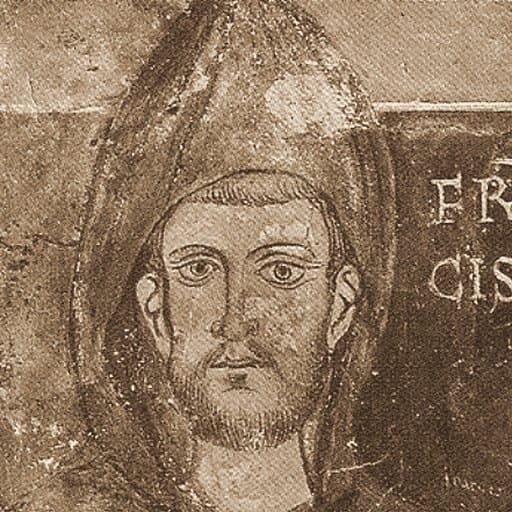
as depicted by Unknown artist (fresco, Sacro Speco, Subiaco)Image credit Francis of Assisi
1181/82–1226 · Catholic (Franciscan)
Founder of the Friars Minor, remembered for radical poverty, love of creation and the Canticle of the Creatures.
Read: The Writings of St. Francis of Assisi (including the Canticle of the Sun)Julian of Norwich
c. 1343–after 1416 · Catholic (England)
Anchoress whose Revelations of Divine Love is the first known book in English by a woman. Some read her hope that “all shall be well” as universalism; she says she holds what the Church teaches.
Read: Revelations of Divine LoveFree online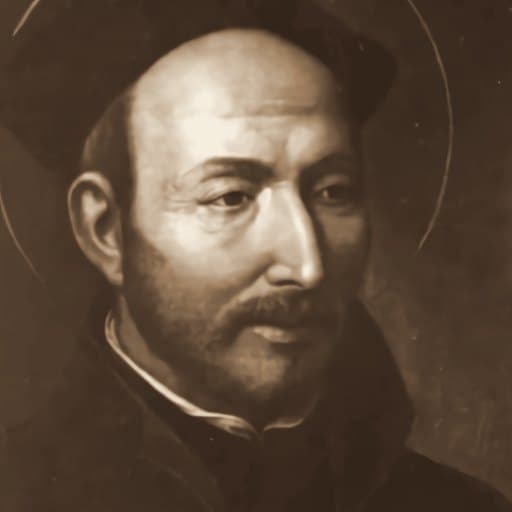
Image credit Ignatius of Loyola
1491–1556 · Catholic (Jesuit)
Basque soldier turned priest who wrote the Spiritual Exercises and founded the Society of Jesus.
Read: The Spiritual ExercisesFree online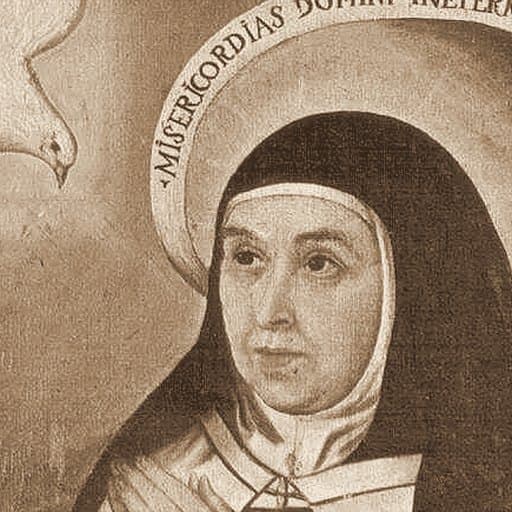
Image credit Teresa of Ávila
1515–1582 · Catholic (Carmelite)
Spanish Carmelite reformer and teacher of prayer (Interior Castle); with Catherine of Siena, the first women named Doctors of the Church (1970).
Read: The Interior CastleFree online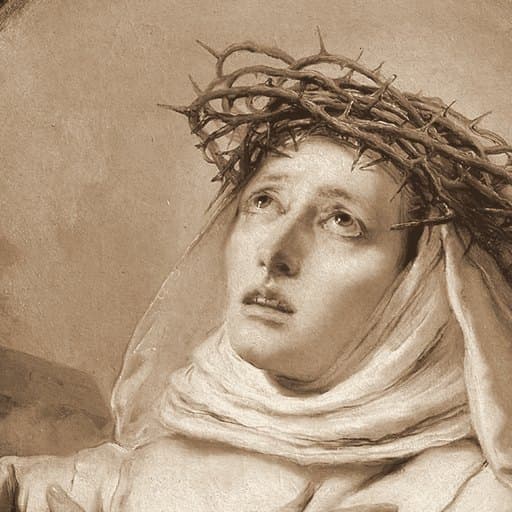
Image credit Catherine of Siena
1347–1380 · Catholic (Dominican laywoman)
Dominican tertiary and mystic who urged the pope to return from Avignon to Rome; author of The Dialogue and a Doctor of the Church.
Read: The DialogueFree online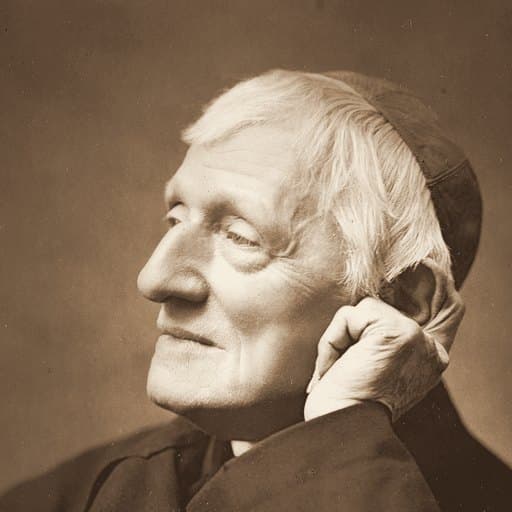
Image credit John Henry Newman
1801–1890 · Anglican, then Catholic (1845)
Oxford Movement leader who became a Catholic in 1845 and a cardinal in 1879; wrote on the development of doctrine. Canonized 2019.
Read: Apologia Pro Vita SuaFree online
Practices associated with Roman Catholic churches
The Examen
At the end of the day, look back over it with Jesus. Thank Him for what was good, ask for light, and notice where you followed Him and where you drifted. Tell Him plainly, receive His mercy, and ask for His help tomorrow. Ten quiet minutes is enough to begin.
Ignatius of Loyola, Spiritual Exercises (approved by Pope Paul III in 1548). The "General Examen" has five points, starting with thanks.
Source: Spiritual Exercises, General Examen“It contains in it five Points. First Point. The first Point is to give thanks to God our Lord for the benefits received.”
About the ExamenLectio Divina
Choose a short passage, perhaps a few verses from a Gospel. Read it slowly, twice. Stay with a word or phrase that catches you and turn it over. Then speak to God about it, and finally rest quietly with Him. You are not trying to finish the passage. You are listening.
Slow "sacred reading" is set for each day in the Rule of Benedict (ch. 48, 6th century). Guigo II, a Carthusian prior of the Grande Chartreuse, described its four steps (reading, meditation, prayer, contemplation) in The Ladder of Monks, 12th century.
Source: Reading the Sacred (Mepkin Abbey)“Guigo 2, a Carthusian prior of Grand Chartreuse in 1180 wrote a treatise of methodical prayer entitled “Scala Claustralium””
About LectioThe Liturgy of the Hours
Pick one hour to keep, morning or night. Pray a psalm or two, listen to a short reading, and offer your prayers for the day. Many people use a breviary or an app with the day's texts. Over time the psalms become your own words to God.
Prayer at set hours of the day and night. The Rule of Benedict (6th century) fixes seven day offices plus the night office, after Psalm 119:164.
Source: Rule of St. Benedict (tr. Doyle), ch. 16““Seven times in the day,” says the Prophet, “I have rendered praise to You.””
About Morning PrayerWednesday and Friday fasts
Choose one day this week, Wednesday or Friday, and fast in a simple way: skip a meal, or go without meat or another comfort. When you feel the hunger, turn it into prayer and remember Jesus, who gave Himself for us. Check with a doctor first if you have a health condition.
The Didache, a church manual from about AD 100, tells Christians to fast on Wednesday and Friday. The Orthodox Church keeps these fast days today.
Source: Didache, ch. 8“but fast on the fourth day and the Preparation (Friday)”
About FastingThe Rosary
Take one set of mysteries, perhaps the sorrowful ones about Jesus' passion. For each, pray an Our Father and ten Hail Marys while you picture the scene from the Gospels. The beads keep count so your mind can stay with Him. Catholics pray it to walk through Jesus' life alongside Mary, His mother.
A prayer with beads that pairs the Our Father and Hail Mary with meditation on events in the lives of Jesus and Mary. It grew up in the late Middle Ages; its traditional attribution to St. Dominic is questioned by historians.
Source: Catholic Encyclopedia (1912), "Rosary"“It was in this way that the tradition of Dominican authorship grew up.”
Compare Roman Catholic teaching by topic
Roman Catholic coverage: 31 of 31 questions. Review status and scoring
Roman Catholic Church · 31 topics available
Read the positions and sources
Scripture and authority
When Christians disagree about what to believe, which is closest to what you think should settle it?
Teaches: “Scripture and Tradition together, with the bishops united to the pope giving the authentic interpretation.”
Source: Catechism of the Catholic Church, CCC 85“The task of giving an authentic interpretation of the Word of God, whether in its written form or in the form of Tradition, has been entrusted to the living teaching office of the Church alone.”
Which is closest to what you think about creeds and confessions (written summaries of what a church believes)?
Teaches: “The creeds and the church's councils set out teaching that is settled for good and can't be revised.”
Source: Catechism of the Catholic Church, CCC 88“The Church's Magisterium exercises the authority it holds from Christ to the fullest extent when it defines dogmas”
Which is closest to how you see the Bible's truthfulness?
Teaches: “The Bible is without error in everything it affirms, including what it says about history and the world.” or “The Bible is fully trustworthy in everything it teaches about God, salvation and how to live.”
Some hold: “The Bible is God's word through human writers. It tells the truth about Christ, and careful scholarship helps us read it.”
Source: Catechism of the Catholic Church, CCC 107 (quoting Dei Verbum 11)“we must acknowledge that the books of Scripture firmly, faithfully, and without error teach that truth which God, for the sake of our salvation, wished to see confided to the Sacred Scriptures”
Salvation and grace
When God puts a sinner right with Himself, which is closest to what you think happens?
Teaches: “God forgives us and makes us truly righteous within by His grace, which grows as faith works through love.”
Some hold: “God heals us and draws us into His own life, so that by grace we come to share in His nature.”
Makes room for: “God forgives our sins when we believe, repent and are baptized, and from then on we walk in obedience to Him.” or “God brings us into a right relationship with Him, and that new life means following Jesus every day with His people.”
Source: Catechism of the Catholic Church, CCC 1989, 1992“Justification is not only the remission of sins, but also the sanctification and renewal of the interior man.”
Which is closest to how you think God usually gives people His saving grace?
Teaches: “Mainly through the sacraments of the church, starting with baptism, received with faith.”
Makes room for: “Through His Word preached and the sacraments, which the Holy Spirit uses to create and strengthen faith.”
Source: Catechism of the Catholic Church, CCC 1129“The Church affirms that for believers the sacraments of the New Covenant are necessary for salvation.”
Which is closest to what you think about whom Christ died to save?
Teaches: “Christ died for every person, so that anyone who turns to Him can be saved.”
Some hold: “Christ's death is enough for all people, and God intended it to surely save those He chose.”
Source: Catechism of the Catholic Church, CCC 605“The Church, following the apostles, teaches that Christ died for all men without exception”
Which is closest to what you think about God's choosing and our choice?
Teaches: “God calls everyone and gives His grace first. We freely cooperate with it, and it never forces us.”
Some hold: “Before creation God chose His people, not for anything He saw in them, and His grace surely brings them to faith.” or “God's grace goes before everyone and frees us to respond. God chooses in Christ those He knows will believe.”
Makes room for: “Salvation is God's work alone, and He chose us in Christ. He chose no one to be lost; the lost refuse His grace.” or “God's choosing and our free choice are both true in Scripture, and I don't think we need a system to fit them together.”
Source: Catechism of the Catholic Church, CCC 600, 2002“When therefore he establishes his eternal plan of "predestination", he includes in it each person's free response to his grace”
Which is closest to what you think: can a true believer fall away and be lost?
Teaches: “Yes. Grace can be lost through serious sin, and God restores it through repentance and confession.”
Makes room for: “Yes. A believer can turn away from Christ and be lost, but while we live His grace keeps calling us back.”
Source: Catechism of the Catholic Church, CCC 1861“It results in the loss of charity and the privation of sanctifying grace, that is, of the state of grace.”
Which is closest to what you think about knowing where you stand with God?
Teaches: “I trust God's mercy today and hope for heaven, as I keep holding to Christ to the end of my life.”
Makes room for: “I can be sure of God's grace because He promised it to me in His Word and in baptism, whatever I feel.”
Source: Catechism of the Catholic Church, CCC 2005“We cannot therefore rely on our feelings or our works to conclude that we are justified and saved.”
Which is closest to what you think about how God makes believers holy?
Teaches: “God makes us holy through prayer, repentance and the sacraments as we grow toward union with Him.”
Makes room for: “God calls us to perfect love in this life. We press on toward it, and for most of us it's a lifelong path.” or “Holiness grows over a whole lifetime. Sin remains in us until we die, though it no longer rules us.” or “Holiness is following Jesus in daily obedience, with a church that encourages and corrects us.”
Source: Catechism of the Catholic Church, CCC 2014“Spiritual progress tends toward ever more intimate union with Christ.”
The church
Which is closest to how you think the church should be led?
Teaches: “By bishops in succession from the apostles, with the pope, the bishop of Rome, as head of the whole church on earth.”
Source: Catechism of the Catholic Church, CCC 882“has full, supreme, and universal power over the whole Church, a power which he can always exercise unhindered”
Which is closest to what you think about who may be ordained as a pastor or priest?
Teaches: “Only men may be ordained as priests and bishops, following Christ's choice of twelve men as apostles.”
Source: Catechism of the Catholic Church, CCC 1577“For this reason, the ordination of women is not possible.”
Which is closest to what you think about ordination in an unbroken line from the apostles?
Teaches: “It's necessary, together with the apostles' faith kept whole. Without bishops in that line who hold that faith, there is no valid priesthood and the Eucharist is not kept in its fullness.”
Source: Catechism of the Catholic Church, CCC 1411; see also 1400“Only validly ordained priests can preside at the Eucharist and consecrate the bread and the wine so that they become the Body and Blood of the Lord.”
Which is closest to what you think about Christians, war and oaths?
Teaches: “Christians may serve in the military for a just cause and may take an oath when the law asks for one.”
Some hold: “Christians should work for peace, and each believer may follow conscience about serving in the military.”
Makes room for: “Christians should not fight in war or use violence, but taking an oath in court is fine.”
Source: Catechism of the Catholic Church, CCC 2309, 2154; see also 2311“The strict conditions for legitimate defense by military force require rigorous consideration.”
Baptism and the Lord’s Supper
Which is closest to what you think about who should be baptized?
Teaches: “Believers and their children. Babies of Christian families should be baptized and raised in the faith.”
Source: Catechism of the Catholic Church, CCC 1250“the Church and the parents would deny a child the priceless grace of becoming a child of God were they not to confer Baptism shortly after birth”
Which is closest to what you think happens in baptism?
Teaches: “God truly washes away sin and gives new birth in baptism, joining the person to Christ.”
Source: Catechism of the Catholic Church, CCC 1213“Through Baptism we are freed from sin and reborn as sons of God”
Which is closest to what you think about how baptism should be done?
Teaches: “Pouring, sprinkling or immersion are all fine. The water and the name of the Trinity are what matter.”
Some hold: “Usually by pouring water on the head, as a sign of the Holy Spirit poured out.”
Makes room for: “By immersing three times, in the name of the Father, and of the Son, and of the Holy Spirit.”
Source: Code of Canon Law, can. 854; see also CCC 1239“Baptism is to be conferred either by immersion or by pouring”
When the church shares the bread and cup, which is closest to what you think?
Teaches: “The bread and wine become Christ's body and blood in their very substance, while still looking like bread and wine.”
Makes room for: “The bread and wine truly become Christ's body and blood. How this happens is a holy mystery we don't define.”
Source: Catechism of the Catholic Church, CCC 1376 (quoting Trent, Sess. 13)“This change the holy Catholic Church has fittingly and properly called transubstantiation.”
Which is closest to what you think about how often a church should share the Lord's Supper?
Teaches: “Every Sunday, as the high point of worship, and on many other days too.”
Makes room for: “Every Sunday, because the first Christians broke bread on the first day of each week.”
Source: Catechism of the Catholic Church, CCC 1389“the Church strongly encourages the faithful to receive the holy Eucharist on Sundays and feast days, or more often still, even daily”
Which is closest to what you think Christ gave His church to keep as lasting rites?
Teaches: “Seven sacraments: baptism, confirmation or chrismation, the Eucharist, confession, anointing of the sick, ordination and marriage.”
Source: Catechism of the Catholic Church, CCC 1113“There are seven sacraments in the Church: Baptism, Confirmation or Chrismation, Eucharist, Penance, Anointing of the Sick, Holy Orders, and Matrimony.”
The Holy Spirit’s gifts
Which is closest to what you think about gifts like prophecy, tongues and healing today?
Teaches: “They can still happen, but the church should test them with care, and they aren't the focus of church life.” or “The Spirit gives gifts to every believer for building up the church, and I don't sort them into kinds.”
Some hold: “All the gifts in the New Testament are for today, and churches should seek them and make room for them.”
Source: Catechism of the Catholic Church, CCC 799-801“It is in this sense that discernment of charisms is always necessary. No charism is exempt from being referred and submitted to the Church's shepherds.”
Which is closest to what you think about being baptized (or filled) with the Holy Spirit?
Teaches: “The Spirit is given through God's Word and baptism, sealed in some churches by anointing or the laying on of hands (at baptism itself in Orthodox and Eastern Catholic churches, later in Western confirmation).”
Some hold: “It's an empowering experience distinct from conversion, but tongues aren't its required sign.”
Makes room for: “Every believer receives the Spirit on coming to faith, and we can be filled again and again.”
Source: Catechism of the Catholic Church, CCC 1285“the reception of the sacrament of Confirmation is necessary for the completion of baptismal grace”
When Christians pray for the sick, which is closest to what you think?
Teaches: “The church anoints the sick in a sacrament that gives grace for body and soul, and sometimes healing.”
Some hold: “God heals, sometimes by miracle and often through medicine. We pray, use both and trust His will.”
Makes room for: “Praying for the sick with laying on of hands is part of every believer's ministry, as Jesus did when He announced the kingdom.” or “God heals as He wills, usually through ordinary means. We pray, but we don't expect miracles as a pattern.”
Source: Catechism of the Catholic Church, CCC 1520“This assistance from the Lord by the power of his Spirit is meant to lead the sick person to healing of the soul, but also of the body if such is God's will.”
Mary and the saints
Which is closest to what you think about the saints in heaven?
Teaches: “We may ask Mary and the saints to pray for us, honoring them while worshiping God alone.”
Source: Catechism of the Catholic Church, CCC 2683“We can and should ask them to intercede for us and for the whole world.”
Which is closest to what you think about Mary, the mother of Jesus?
Teaches: “She was kept free from sin from her conception, stayed ever-virgin, and was taken body and soul into heaven. We honor her and ask her prayers.”
Source: Catechism of the Catholic Church, CCC 966; see also 491, 499“Finally the Immaculate Virgin, preserved free from all stain of original sin, when the course of her earthly life was finished, was taken up body and soul into heavenly glory”
Last things
Which is closest to what you think about Christ's return and the thousand years in Revelation 20?
Teaches: “The thousand years is the present age of Christ's reign. He will return once, to raise the dead and judge.”
Some hold: “Christ will return in glory to judge the living and the dead, and I don't think we need a timeline.”
Source: Catechism of the Catholic Church, CCC 676“the Church has rejected even modified forms of this falsification of the kingdom to come under the name of millenarianism”
Which is closest to what you think happens to believers when they die, before the final resurrection?
Teaches: “Those who die in God's grace but still need cleansing are purified before heaven, and our prayers help them.”
Makes room for: “They rest in Christ, and the church keeps praying for them as they wait for the resurrection.” or “They go straight to be with Christ, fully forgiven, and wait for the resurrection of the body.”
Source: Catechism of the Catholic Church, CCC 1030“All who die in God's grace and friendship, but still imperfectly purified, are indeed assured of their eternal salvation; but after death they undergo purification”
Worship
Which kind of service feels most like worship to you?
Teaches: “The ancient liturgy, sung or chanted, with the church's set prayers in an order kept for centuries.” or “A set order from a prayer book or hymnal, with Scripture readings, confession, the creed and the Lord's Prayer.”
Source: Second Vatican Council, Sacrosanctum Concilium, 113“Liturgical worship is given a more noble form when the divine offices are celebrated solemnly in song”
Which music helps you worship most?
Teaches: “Ancient chant and sung prayers, mostly without instruments.” or “Hymns with organ or piano, and a choir.”
Makes room for: “A worship band leading contemporary songs.” or “Gospel music, with choir, organ and drums, and freedom to respond.”
Source: Sacrosanctum Concilium, SC 116; see also SC 120“The Church acknowledges Gregorian chant as specially suited to the Roman liturgy: therefore, other things being equal, it should be given pride of place in liturgical services.”
How much should the church year shape worship?
Teaches: “A lot. The whole year follows the feasts and fasts, with readings set for each day.”
Source: Sacrosanctum Concilium, SC 102“Within the cycle of a year, moreover, she unfolds the whole mystery of Christ”
In worship, what do you most hope for?
Teaches: “Reverent, ordered beauty, with the Lord's Supper at the center.”
Source: Catechism of the Catholic Church, CCC 1324“The Eucharist is "the source and summit of the Christian life."”