

Mennonite (Anabaptist) beliefs: what the Mennonite (Anabaptist) tradition teaches
Mennonites follow Jesus as Lord in daily discipleship, within a believers' church joined by baptism on confession of faith. They read Scripture "in harmony with Jesus Christ" in community, and they practice peace, "doing justice, bringing reconciliation, and practicing nonresistance even in the face of violence and warfare."
Worship: Simple worship with strong congregational (often four-part) hymn singing, preaching, sharing and prayer; communion and foot washing a few times a year.
This coding follows Mennonite Church USA's 1995 Confession of Faith. More traditional Anabaptist groups, including conservative and Old Order Mennonites, Amish, Hutterites, Brethren in Christ and Mennonite Brethren, often hold these convictions, especially nonresistance and church discipline, with less room for individual conscience than described here.
Take the quizVisit a church
Mennonite Church USA
Mennonite Church USA congregation finder
Mennonite Church USA no longer publishes a single congregation finder. Look for a church that names Mennonite Church USA or your area conference (see mennoniteusa.org, Church Structure, Area Conferences).
These are each tradition's own church directories. We don't review individual congregations.
Read more
- Confession of Faith in a Mennonite Perspective (1995) — Mennonite Church USAFree online
Today's Mennonite confession, with a short commentary on each article.
- The Schleitheim Confession (1527) — Michael Sattler and the Swiss BrethrenFree online
The earliest Anabaptist statement, written by believers who risked their lives to gather.
- Anabaptist Essentials — Palmer Becker
A short, readable book on the core convictions Mennonites hold.
Confessions and statements from Mennonite (Anabaptist) churches
Figures and practice companions
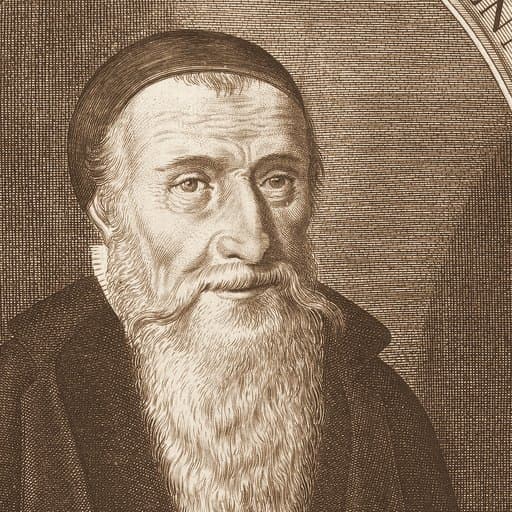
Image credit Menno Simons
1496–1561 · Anabaptist (Mennonite)
Dutch priest who joined the peaceful Anabaptists in 1536 and shepherded them for 25 years; the Mennonites bear his name. His teaching that Christ's flesh came from heaven is not held by Mennonites today.
Read: Foundation of Christian DoctrineFree onlineMichael Sattler
c. 1490–1527 · Anabaptist (Swiss Brethren)
Former Benedictine prior who led the Swiss Brethren meeting that agreed the Schleitheim Confession (1527); burned at Rottenburg that year.
Read: The Schleitheim ConfessionFree online
Practices associated with Mennonite (Anabaptist) churches
Washing one another's feet
Read John 13 together. Then, in pairs, wash one another's feet with a basin and towel, slowly and without hurry. It can feel awkward. That is part of it. Jesus, the Lord, knelt to serve His friends, and this small act lets you practise His humility with the people beside you.
Kept as an ordinance by many Anabaptists, set out in the Dordrecht Confession (1632), Article XI, after John 13. Some Holiness and Pentecostal churches keep it too.
Source: Dordrecht Confession of Faith (1632), Art. XI“We also confess a washing of the saints' feet, as the Lord Christ not only instituted, enjoined and commanded it”
Compare Mennonite (Anabaptist) teaching by topic
Mennonite (Anabaptist) coverage: 19 of 31 questions. Review status and scoring
Mennonite Church USA · 19 topics available
No official position scored: Which is closest to what you think about creeds and confessions (written summaries of what a church believes)? Which is closest to what you think: can a true believer fall away and be lost? Which is closest to what you think about knowing where you stand with God? Which is closest to what you think about how often a church should share the Lord's Supper? When Christians pray for the sick, which is closest to what you think? Which is closest to what you think happens to believers when they die, before the final resurrection? Which is closest to what you think about the saints in heaven? Which is closest to what you think about Mary, the mother of Jesus? Which kind of service feels most like worship to you? Which music helps you worship most? How much should the church year shape worship? In worship, what do you most hope for?
Read the positions and sources
Scripture and authority
When Christians disagree about what to believe, which is closest to what you think should settle it?
Teaches: “The Bible alone has the final word. Creeds, councils and teachers are all tested by it.”
Makes room for: “The Bible comes first, read together with the church's historic creeds and with reason and experience.”
Source: Confession of Faith in a Mennonite Perspective (1995), Art. 4“Other claims on our understanding of Christian faith and life, such as tradition, culture, experience, reason, and political powers, need to be tested and corrected by the light of Holy Scripture.”
Which is closest to what you think about creeds and confessions (written summaries of what a church believes)?
Teaches: “The historic creeds matter, and our confessions guide us, but they leave room to read some things differently.”
Some hold: “A short statement of faith keeps us united, and the Bible itself is what we really stand on.”
Not yet checked against the primary text, so the quiz doesn’t score this.
Which is closest to how you see the Bible's truthfulness?
Teaches: “The Bible is fully trustworthy in everything it teaches about God, salvation and how to live.”
Some hold: “The Bible is God's word through human writers. It tells the truth about Christ, and careful scholarship helps us read it.”
Source: Confession of Faith in a Mennonite Perspective (1995), Art. 4“the fully reliable and trustworthy standard for Christian faith and life”
Salvation and grace
When God puts a sinner right with Himself, which is closest to what you think happens?
Teaches: “God brings us into a right relationship with Him, and that new life means following Jesus every day with His people.”
Some hold: “God forgives us and counts us righteous for Christ's sake, crediting His righteousness to us. We receive this by faith alone.”
Source: Confession of Faith in a Mennonite Perspective (1995), Art. 17“Our participation in Christ includes both salvation and discipleship.”
Which is closest to how you think God usually gives people His saving grace?
Teaches: “When a person hears the gospel and personally trusts Christ. Baptism and the Lord's Supper then show it.”
Source: Confession of Faith in a Mennonite Perspective (1995), Art. 8“We receive God's salvation when we repent of sin and accept Jesus Christ as Savior and Lord.”
Which is closest to what you think about whom Christ died to save?
Teaches: “Christ died for every person, so that anyone who turns to Him can be saved.”
Source: Confession of Faith in a Mennonite Perspective (1995), Art. 8“has provided the way of salvation for all people”
Which is closest to what you think about God's choosing and our choice?
Teaches: “God calls everyone and gives His grace first. We freely cooperate with it, and it never forces us.”
Some hold: “God's grace goes before everyone and frees us to respond. God chooses in Christ those He knows will believe.”
Source: Confession of Faith in a Mennonite Perspective (1995), Art. 8“God brings us into right relationship without coercion.”
Which is closest to what you think: can a true believer fall away and be lost?
Teaches: “Yes. A believer can turn away from Christ and be lost, but while we live His grace keeps calling us back.”
Makes room for: “No. Everyone God truly saves, He keeps, and they will go on in faith to the end.”
Not yet checked against the primary text, so the quiz doesn’t score this.
Which is closest to what you think about knowing where you stand with God?
Teaches: “We trust God and follow Jesus together, and certainty isn't something we spend much time on.”
Makes room for: “The Spirit gives an inner witness that I'm God's child, and I keep walking with Him so I don't drift away.” or “I trust God's mercy today and hope for heaven, as I keep holding to Christ to the end of my life.”
Not yet checked against the primary text, so the quiz doesn’t score this.
Which is closest to what you think about how God makes believers holy?
Teaches: “Holiness is following Jesus in daily obedience, with a church that encourages and corrects us.”
Source: Confession of Faith in a Mennonite Perspective (1995), Art. 17“We believe that Jesus Christ calls us to take up our cross and follow him.”
The church
Which is closest to how you think the church should be led?
Teaches: “By each local congregation under Christ, with leaders such as pastors, elders or clerks, free from outside control.”
Makes room for: “By bishops or superintendents who oversee a connection of churches and help place their pastors.” or “By elders, pastors and lay elders together, with local churches joined in regional and national assemblies.”
Source: Confession of Faith in a Mennonite Perspective (1995), Art. 16“the local congregation seeks the counsel of the wider church in important matters relating to faith and life”
Which is closest to what you think about who may be ordained as a pastor or priest?
Teaches: “Both men and women may be called by God and ordained as pastors.”
Source: Confession of Faith in a Mennonite Perspective (1995), Art. 15“The church calls, trains, and appoints gifted men and women to a variety of leadership ministries on its behalf. These may include such offices as pastor, deacon, and elder”
Which is closest to what you think about ordination in an unbroken line from the apostles?
Teaches: “Each congregation recognizes and calls its own leaders by their gifts. No outside line of ordination is needed.”
Some hold: “What matters is that ministers hold to the apostles' teaching and are rightly called and ordained by the church.”
Source: Confession of Faith in a Mennonite Perspective (1995), Art. 15“The church calls, trains, and appoints gifted men and women”
Which is closest to what you think about Christians, war and oaths?
Teaches: “Jesus' followers should not fight in war or use violence, and should give a plain yes or no instead of oaths.”
Makes room for: “Christians should work for peace, and each believer may follow conscience about serving in the military.” or “Christians should not fight in war or use violence, but taking an oath in court is fine.”
Source: Confession of Faith in a Mennonite Perspective (1995), Art. 22“As disciples of Christ, we do not prepare for war, or participate in war or military service.”
Baptism and the Lord’s Supper
Which is closest to what you think about who should be baptized?
Teaches: “Only people old enough to understand the gospel and confess faith in Christ for themselves.”
Source: Confession of Faith in a Mennonite Perspective (1995), Art. 11“Baptism is for those who are of the age of accountability and who freely request baptism on the basis of their response to Jesus Christ in faith.”
Which is closest to what you think happens in baptism?
Teaches: “It's a believer's pledge before God and the church to follow Jesus, and a sign of being cleansed from sin.”
Makes room for: “A sign and seal of God's promise. God uses it to mark us as His, though grace isn't tied to that moment.”
Source: Confession of Faith in a Mennonite Perspective (1995), Art. 11“the baptism of believers with water is a sign of their cleansing from sin. Baptism is also a pledge before the church of their covenant with God”
Which is closest to what you think about how baptism should be done?
Teaches: “Pouring, sprinkling or immersion are all fine. The water and the name of the Trinity are what matter.”
Some hold: “Usually by pouring water on the head, as a sign of the Holy Spirit poured out.”
Makes room for: “By immersion only, going fully under the water, as a picture of burial and rising with Christ.”
Source: Confession of Faith in a Mennonite Perspective (1995); Schleitheim (1527); Dordrecht (1632), Art. 11, Commentary“The church may baptize by pouring, immersion, or the sprinkling of water”
When the church shares the bread and cup, which is closest to what you think?
Teaches: “Christ is truly present by His Spirit, and believers feed on Him by faith, while the bread stays bread.” or “We remember Christ's death, proclaim it and look for His return, with the bread and cup as signs.”
Source: Confession of Faith in a Mennonite Perspective (1995), Art. 12“the Lord's Supper is a sign by which the church thankfully remembers the new covenant which Jesus established by his death”
Which is closest to what you think about how often a church should share the Lord's Supper?
Teaches: “Regularly, perhaps monthly or quarterly. It's special, but it isn't part of every service.” or “A few times a year, with careful preparation and self-examination in the days before.”
Not yet checked against the primary text, so the quiz doesn’t score this.
Which is closest to what you think Christ gave His church to keep as lasting rites?
Teaches: “Baptism, the Lord's Supper and washing one another's feet, as Jesus told His disciples to do.”
Makes room for: “Two ordinances, baptism and the Lord's Supper, kept in obedience as signs of the gospel.”
Source: Confession of Faith in a Mennonite Perspective (1995), Art. 13“you also ought to wash one another's feet”
The Holy Spirit’s gifts
Which is closest to what you think about gifts like prophecy, tongues and healing today?
Teaches: “The Spirit gives gifts to every believer for building up the church, and I don't sort them into kinds.”
Some hold: “They can still happen, but the church should test them with care, and they aren't the focus of church life.”
Source: Confession of Faith in a Mennonite Perspective (1995), Art. 3“By the gifts of the Holy Spirit, all Christians are called to carry out their particular ministries.”
Which is closest to what you think about being baptized (or filled) with the Holy Spirit?
Teaches: “Every believer receives the Spirit on coming to faith, and we can be filled again and again.”
Source: Confession of Faith in a Mennonite Perspective (1995), Art. 11“Believers are baptized into Christ and his body by the Spirit, water, and blood.”
When Christians pray for the sick, which is closest to what you think?
Teaches: “God heals, sometimes by miracle and often through medicine. We pray, use both and trust His will.”
Some hold: “Praying for the sick with laying on of hands is part of every believer's ministry, as Jesus did when He announced the kingdom.”
Not yet checked against the primary text, so the quiz doesn’t score this.
Source: Confession of Faith in a Mennonite Perspective (1995), Art. 3
Mary and the saints
Which is closest to what you think about the saints in heaven?
Teaches: “Every believer, living or dead, is a saint. We remember faithful Christians without special honor for some.”
Makes room for: “We thank God for the saints and follow their example, but we pray to God alone.”
Not yet checked against the primary text, so the quiz doesn’t score this.
Which is closest to what you think about Mary, the mother of Jesus?
Teaches: “She was a godly woman God chose to bear Jesus, and an example of faith like other believers.”
Not yet checked against the primary text, so the quiz doesn’t score this.
Last things
Which is closest to what you think about Christ's return and the thousand years in Revelation 20?
Teaches: “Christ will return in glory to judge the living and the dead, and I don't think we need a timeline.”
Source: Confession of Faith in a Mennonite Perspective (1995), Art. 24“At Christ's glorious coming again for judgment, the dead will come out of their graves”
Which is closest to what you think happens to believers when they die, before the final resurrection?
Teaches: “They go straight to be with Christ, fully forgiven, and wait for the resurrection of the body.”
Not yet checked against the primary text, so the quiz doesn’t score this.
Worship
Which kind of service feels most like worship to you?
Teaches: “A long time of singing, then preaching, with freedom for spontaneous prayer and response.”
Some hold: “A set order from a prayer book or hymnal, with Scripture readings, confession, the creed and the Lord's Prayer.”
Not yet checked against the primary text, so the quiz doesn’t score this.
Which music helps you worship most?
Teaches: “Hymns with organ or piano, and a choir.” or “Voices alone, singing hymns and psalms together in harmony.”
Makes room for: “A worship band leading contemporary songs.”
Not yet checked against the primary text, so the quiz doesn’t score this.
How much should the church year shape worship?
Teaches: “Some. We keep the main seasons: Advent, Christmas, Lent, Holy Week and Easter.”
Some hold: “A little. We mark Christmas and Easter and plan the rest around preaching series.”
Not yet checked against the primary text, so the quiz doesn’t score this.
In worship, what do you most hope for?
Teaches: “A close church family sharing life, singing together and caring for one another.”
Makes room for: “Clear preaching of God's Word that teaches and convicts, with heartfelt singing.” or “Quiet stillness before God, with plenty of room for silence.”
Not yet checked against the primary text, so the quiz doesn’t score this.